Wood fence installation in San Diego costs $28 to $55 per linear foot installed in 2026. Pressure-treated pine runs $28 to $38, western red cedar $35 to $48, and redwood $42 to $55. A typical 150-foot cedar privacy fence totals $5,250 to $7,200. The rest of this post breaks down those numbers by species, height, and site, then walks the timeline and the install details that decide whether your fence lasts 7 years or 20.

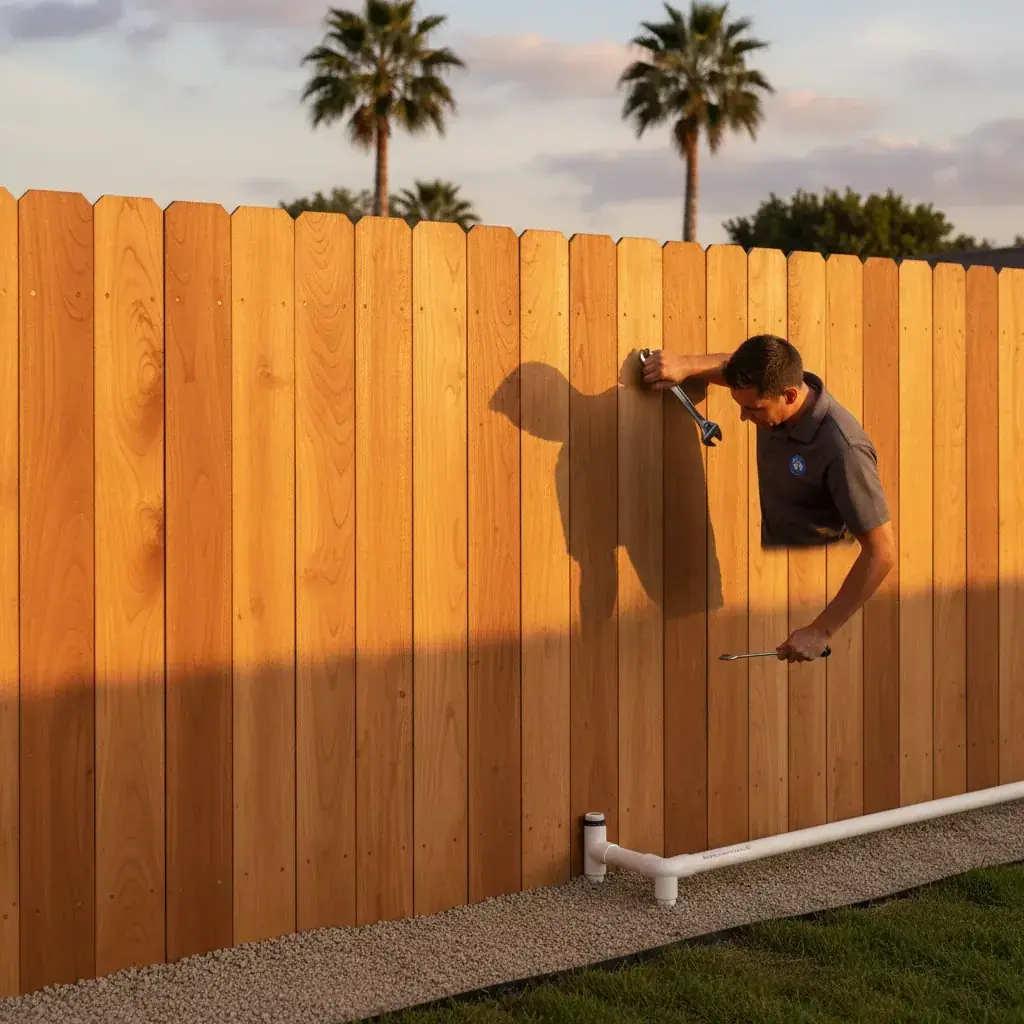
A freshly installed cedar wood fence in a San Diego backyard with golden afternoon light and a palm tree silhouette visible above the fence line

What a wood fence installation actually costs per linear foot in San Diego

Most San Diego homeowners pay between $28 and $55 per linear foot for a professionally installed wood fence, all in. That range covers materials, labor, post concrete, and standard hardware. Where you land inside it depends on three things: wood species, fence height, and site conditions.

Here’s the breakdown by wood type for a standard 6-foot privacy fence in San Diego, 2026:

Wood speciesCost per linear foot (installed)150-ft fence totalBest use
Pressure-treated pine$28–$38$4,200–$5,700Budget builds, posts below grade
Western red cedar$35–$48$5,250–$7,200Most San Diego yards
Redwood$42–$55$6,300–$8,200Coastal and premium installs

These are full installed prices. They include materials, labor, post concrete, and standard hardware. Materials alone run about $12 to $20 per foot; the rest covers labor, concrete, demo, project management, and the dig.

A typical San Diego backyard fence runs 120–180 linear feet. So for a 150-foot cedar privacy fence, expect a total installed cost somewhere between $5,250 and $7,200. Redwood on the same run pushes toward $6,300–$8,200.

Height changes the price as much as species. Taller fences need longer posts, deeper holes, and more pickets per foot:

Fence heightCost per linear foot (cedar, installed)Notes
4-foot picket$24–$34Front yards, decorative runs
6-foot privacy$35–$48Most common San Diego backyard build
8-foot privacy$48–$66Often needs a permit; check height rules

Gates and extras sit on top of the per-foot fence price. Plan for these as separate line items:

Add-onTypical San Diego cost
Single walk gate (3–4 ft)$300–$650
Double or drive gate (8–12 ft)$900–$2,500
Old fence demo and haul-away$3–$6 per linear foot
Stain and seal after install$1–$3 per square foot
Hot-dipped galvanized or stainless hardware upgrade$3–$8 per post

Those numbers shift with site conditions. Rocky soil in Tierrasanta or El Cajon adds time to post digging. Sloped lots in La Mesa or Clairemont require stepped or racked panel layouts, which add labor. Existing fence demo runs $3–$6 per linear foot on top of install.

For a deeper look at what drives fence pricing in 2026, see our full fence cost guide for San Diego. This post focuses on the install process and the decisions that affect how your fence holds up over time.

One thing worth saying clearly: the cheapest bid rarely wins over a decade. A fence installed with shallow posts, untreated lumber at ground contact, or bare steel hardware will fail in five years in this climate. The cost gap between the right install and the wrong one is real.

Timeline from quote to last picket (typical 5 to 10 days)

Most wood fence installations in San Diego County run from first call to finished fence in about 5 to 10 business days. Here’s what that actually looks like:

Day 1, Quote and site walk: The fence pro measures the run, checks for slope, notes gate locations, and looks for buried utilities you may not know about, then puts together a written quote.

Days 2–3, Permits and HOA review (if needed): Not every project requires a permit, but many do. San Diego City and County rules generally require a permit for fences over 6 feet. If you’re in an HOA, their review process runs parallel and usually takes 3–7 business days. More on that below.

Day 4, Material order and scheduling: Once permits are confirmed (or confirmed not needed), the crew orders your lumber and sets a dig date. Most wood species ship within 1–2 days from local yards.

Day 5–6, Post setting: Posts go in first. The crew digs to proper depth, sets posts in concrete, and lets them cure 24–48 hours. This is the single most important step in the whole project.

Days 7–10, Rails and pickets: Once posts are solid, rails and pickets go on fast. A two-person crew can hang 100–120 linear feet of pickets in a single day on a clean site.

If permits aren’t required and your HOA approves quickly, installs can be completed start to finish in 5 days. Complex sites with variances or tricky slope work sometimes stretch to two full weeks. The fence pro will give you the honest timeline during the property walk.

Cedar vs redwood vs pressure-treated pine for our climate

San Diego’s climate looks mild on paper, but it’s genuinely hard on wood fences. You’ve got UV intensity, marine moisture from the coast, Santa Ana dry heat from the east, and the occasional January rain that soaks into anything porous. The wood you choose determines how much of that your fence can absorb.

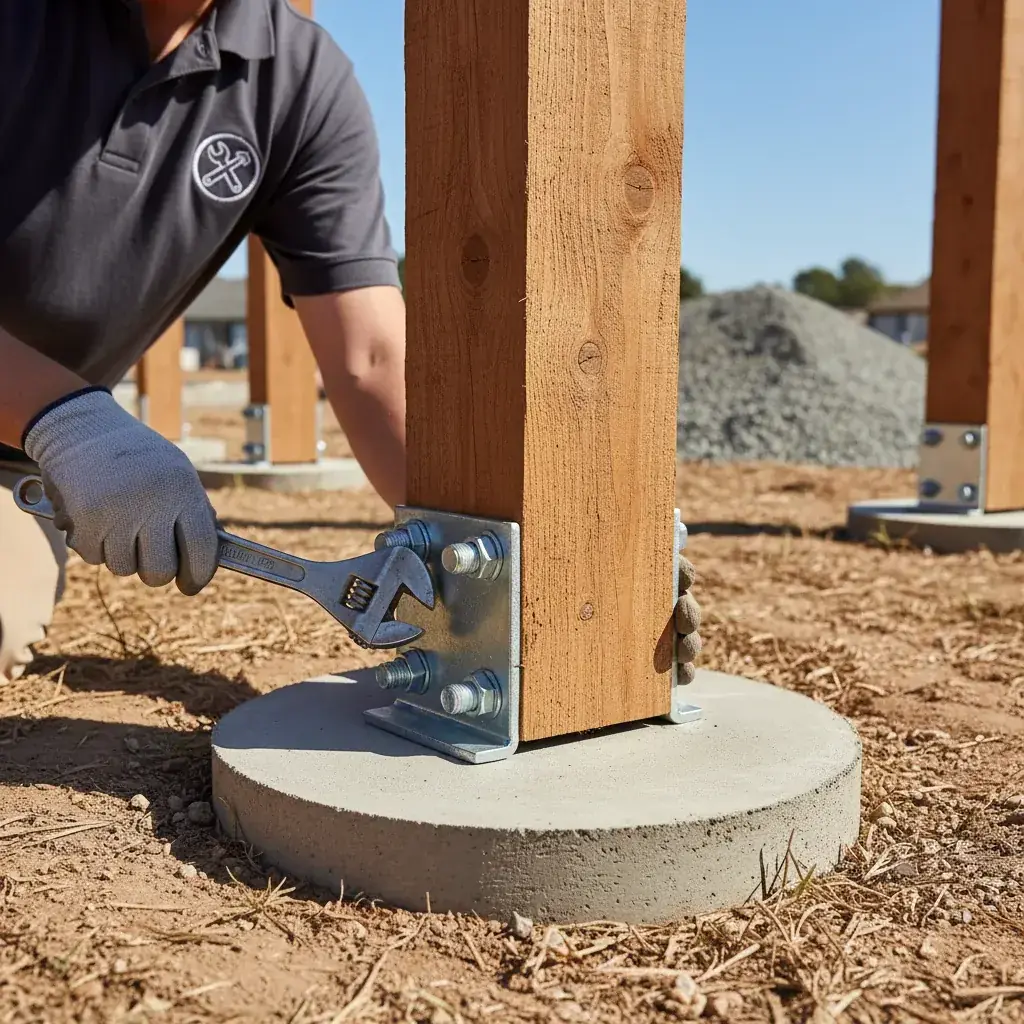
Close-up of a galvanized post anchor set in concrete with a cedar 4x4 post seated on top and San Diego soil visible at the base

Western red cedar is our most common recommendation for San Diego yards. It has natural oils that resist moisture and insects. It takes stain beautifully and holds it longer than pine. It’s also dimensionally stable, meaning it won’t cup or warp as badly during the swing from dry Santa Ana conditions to wet winter air. For most homeowners in zip codes from 92103 to 92131, cedar is the right call.

Redwood is the premium option. The heartwood is more decay-resistant than cedar and it weathers to a beautiful silver-gray if you leave it unsealed. It costs more upfront, but in coastal zones, Ocean Beach, Pacific Beach, La Jolla, Coronado, the extra resistance to salt air moisture is worth the investment. We go deeper on this tradeoff in our post on choosing the best wood for a San Diego fence.

Pressure-treated pine costs the least and works best as post material in ground contact, not as the visible fence surface. The chemical treatment process leaves the wood looking greenish when new, and it can take a year to accept stain evenly. It’s durable underground, which is exactly where it gets used: as a treated post beneath a cedar or redwood fence above grade.

One detail that gets overlooked: the hardware. Coastal communities see salt-laden air accelerate rust on standard steel screws and post caps in 2–3 years. Hot-dipped galvanized or stainless steel hardware costs a few dollars more per post but prevents the orange staining and structural failure that come from corroding fasteners. Our post on salt air hardware for coastal fences covers the specific products worth using.

Permits, HOA review, and property line checks before the dig

This is the part most homeowners underestimate. Getting the pre-work right protects you from having to tear down a fence you paid for.

Property lines: Don’t assume the old fence is on the line. In San Diego County, a significant number of residential fence disputes come from fences that were built six inches or two feet onto a neighbor’s property, sometimes decades ago. Before the dig, the fence pro will ask if you have a recent survey. If not, they can work with what’s on record, but a property line confirmation is strongly encouraged for any fence along a shared boundary. A basic survey from a licensed land surveyor in San Diego runs $500–$1,500 and is far cheaper than a dispute.

Permits: San Diego City’s fence code generally allows fences up to 6 feet in side and rear yards without a permit. Anything taller, or anything in a front yard above 42 inches, typically requires one. San Diego County unincorporated areas have their own setback and height rules, check them here. The fence pros in our network pull permits when they’re required. They don’t skip them to save you a few days. A fence installed without a required permit can block a home sale or force a teardown.

HOA approval: If you’re in a community with an HOA, their CC&Rs may restrict wood species, stain color, fence height, or even picket orientation. Review cycles vary, some HOAs turn approvals in 48 hours, others take two weeks. The fence pros in our network have worked with HOAs across San Diego County. If you want guidance on navigating that process, our post on HOA fence approval in San Diego covers what to submit and what they’re actually looking for.

Utility locating: The crew calls 811 before every dig. Always. It’s free, it’s required by California law, and it takes two business days. That gets built into every project timeline.

What separates a 7-year fence from a 20-year fence here

Two installs, same wood, same neighborhood, wildly different lifespans. The difference almost always comes down to four things.

Post depth and concrete: In San Diego’s soil, which ranges from sandy coastal fill to decomposed granite inland, posts need to go at least one-third of their above-ground height into the ground, plus another 6 inches. A 6-foot fence needs posts set at least 2.5 feet deep, ideally deeper on slope. Posts set in dry-pack that never cured properly, or posts that stop at 18 inches because the digging got hard, are fence failures waiting to happen.

Ground contact management: Wood rot accelerates at soil contact. Even pressure-treated posts benefit from a gravel base at the bottom of the hole to improve drainage. Cedar and redwood pickets should never touch soil directly. The crews we work with cut pickets to land 1–2 inches above grade. That gap matters.

Hardware quality: As mentioned above, standard steel hardware corrodes. In neighborhoods within two miles of the coast, Mission Hills, Point Loma, Del Mar, Encinitas, the crews we work with default to hot-dipped galvanized or stainless for every fastener, bracket, and post cap. It’s not an upsell. It’s what the environment demands.

Sealing and staining: An unfinished cedar fence will last. A sealed one lasts longer. A first coat of penetrating oil stain applied within the first 6 months and reapplied every 2–3 years is the single easiest thing you can do to add a decade to your fence. Fence staining and sealing is available as a standalone service if you want it done right after install.

The difference between a professional fence installation done right and a rushed job shows up not in week one, but in year six. Proper post depth, correct hardware, and ground clearance are the things a homeowner won’t see on the day of install, and will definitely see by the time their neighbors are replacing theirs.

Coastal vs inland pricing in San Diego

Where your home sits inside the county moves the number. Two factors drive it: soil and salt air.

Inland yards in El Cajon, Santee, Lakeside, and parts of Poway sit on rocky soil or decomposed granite. That hard digging adds labor to every post hole, which can push a 150-foot job up $300 to $700 over a clean coastal dig. Slope is common inland too, and stepped panels add time.

Coastal yards in Ocean Beach, Pacific Beach, La Jolla, Coronado, and Encinitas dig easier, but salt air forces a hardware upgrade. Hot-dipped galvanized or stainless fasteners are not optional within two miles of the water. That upgrade adds $3 to $8 per post and is the difference between a fence that holds and one that rusts at the brackets in three years. Many coastal homeowners also choose redwood over cedar here, which lifts the per-foot cost into the $42 to $55 range.

Wood fence cost FAQ for San Diego

How much does a wood fence cost per foot in San Diego? A professionally installed wood fence costs $28 to $55 per linear foot in San Diego in 2026. Pine runs $28 to $38, cedar $35 to $48, and redwood $42 to $55, all installed.

What’s the total cost to install a wood fence in San Diego? A standard 150-foot, 6-foot privacy fence costs $4,200 to $5,700 in pine, $5,250 to $7,200 in cedar, and $6,300 to $8,200 in redwood. Gates, demo, and steep slope add to that.

What’s the cheapest wood for a fence in San Diego? Pressure-treated pine is the cheapest at $28 to $38 per foot installed. It works best below grade as post material. For the visible fence, cedar lasts far longer in our climate for a modest price bump.

Do I need a permit for a wood fence in San Diego? Most side and rear yard fences up to 6 feet need no permit in the City of San Diego. Fences over 6 feet, or front yard fences above 42 inches, usually require one. County unincorporated areas have their own rules.

How long does a wood fence last in San Diego? A cedar or redwood fence installed with proper post depth, ground clearance, and corrosion-resistant hardware lasts 15 to 20-plus years here. Cheap installs with shallow posts or steel hardware can fail in 5 to 7 years.

How long does installation take? Most San Diego wood fence installs run 5 to 10 business days from first call to last picket. Permits, HOA review, and complex slope work can stretch that to two weeks.

When to call us

Wood fence installation in San Diego touches permits, property lines, HOA rules, and soil conditions that vary block by block. A licensed contractor handles all of that as part of the job, not as an add-on. If you’re looking at a new fence, a replacement, or a damaged section that needs more than a board swap, this is the kind of work that’s worth doing once and doing right. Call us at (858) 400-4906 and we’ll match you with a fence pro.