A chain link install bid in San Diego is not one per-foot number. Height, wire gauge, galvanized vs vinyl-coated fabric, gate count, soil, slope, and whether the line is residential or a commercial perimeter all change the quote. Fence Pros San Diego is a referral service. We do not publish a 2026 installed rate, a lifespan, or a warranty. Compare written bids that name fabric, posts, footings, and hardware.
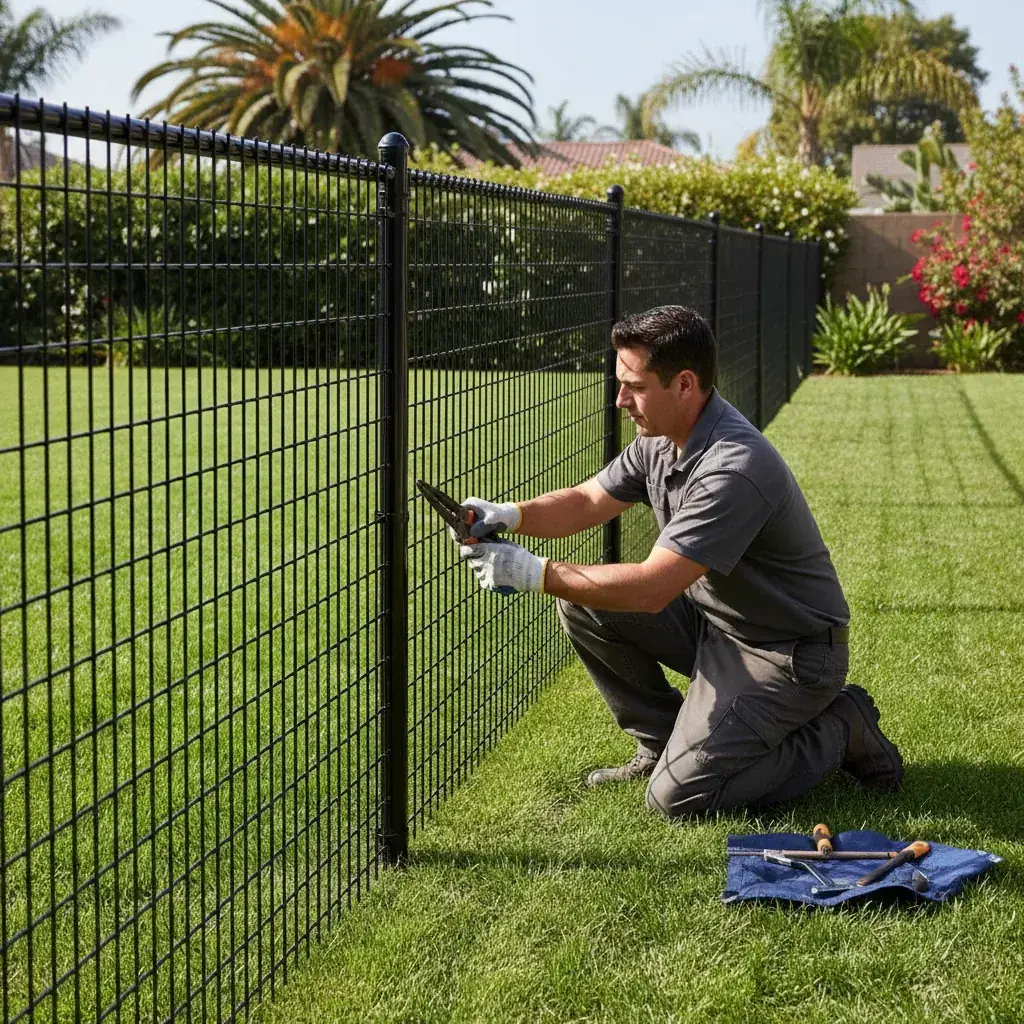
What should be on a chain link bid
Ask every contractor to put these lines in writing. That is how you compare two quotes without a fake table.
| Bid line | Why it matters |
|---|---|
| Height and fabric gauge | Lower gauge number means thicker wire. Residential runs often use 11 or 11.5 gauge. Heavier 9 gauge shows up on security and commercial work. |
| Galvanized vs vinyl-coated fabric | Coating is a look and a salt-air layer, not a free upgrade. |
| Post size, spacing, and footing depth | Undersized posts and shallow holes show up as sag and leaning, not as a cheaper day. |
| Top rail size | Taller runs and long spans often need a heavier rail than a short dog run. |
| Gates, listed separately | Walk-through frames and vehicle openings are not the same labor or hardware. |
| Soil and slope notes | Rocky East County ground and stepped hillside runs take different digging than a flat inland lot. |
| Demo, haul-off, and DigAlert | 811 mark-out is required before digging. Old fence removal is not “included” unless the quote says so. |
A 4-foot galvanized dog run is a different product from a 6-foot vinyl-coated perimeter with slats, and from an 8-foot 9-gauge commercial line. If a bid only says “chain link per foot,” it is not comparable.
Vinyl-coated fabric costs more than straight galvanized. How much is a quote question. Black coating recedes visually; raw silver does not. Near the coast, ask whether tension bands, post caps, and brace bands are coated or stainless. Fabric can outlast the fittings. See coastal fence hardware.
Current material options live on the chain link fence service page. Use it to compare specs, then get measured bids.
Permits, zoning height, and County footings
Permits and height limits are not the same rule.
City of San Diego: Municipal Code Table 142-03A requires a building permit for a fence 7 feet or taller. A shorter fence can still violate front-yard or sight-triangle height. Confirm the yard type before you order 6-foot fabric for a street-facing line.
Unincorporated County: PDS 070 requires a building permit except for fences and freestanding masonry walls not exceeding 6 feet that meet zoning. County Zoning Ordinance Section 6708 still caps many front or exterior side yards at 42 inches and many rear or interior side yards at 72 inches.
Other cities (Chula Vista, Escondido, and the rest) have their own desks. Our fence permits in San Diego guide walks the split.
PDS 070’s wood-post notes recommend a 12-inch-diameter concrete footing at least 24 inches into undisturbed ground or compacted fill, over gravel. That is a County wood-post recommendation, not a City inspection checklist and not automatic proof that a metal chain-link spec matches it. Ask the bid for post diameter, footing diameter, and depth in inches.
For how chain link sits against other materials on a budget, see fence cost San Diego 2026. That page also refuses invented per-foot cards.
Galvanized vs black vinyl-coated
Galvanized
Zinc coating on the wire slows rust. It is the usual utility, dog-run, and back-lot choice when looks are secondary. Inland, away from salt spray, galvanized fabric is often enough if the fittings match. Within about a mile of the water, fittings fail first.
Vinyl-coated
The coating sits over galvanized wire. Black is the common color because it disappears against landscaping. It is not a maintenance-free warranty. UV, sprinkler overspray, and cut ends still matter. If the yard is coastal, specify coated or stainless hardware in the bid, not only coated mesh.
Privacy slats, rails, barbed wire, and drive gates
A basic quote covers posts, fabric, top rail, tension wire, ties, and one named gate. Add-ons are separate.
Privacy slats weave through the diamonds and block sightlines. They also catch wind, so a full-height slat run is a heavier sail than open mesh. Ask whether the quote thickens posts, deepens footings, or adds bracing when slats go on the whole line. Colors and lock styles belong on the slat page: chain link privacy slats.
Heavier top rail (for example stepping from 1-3/8 inch to 1-5/8 inch) is a stability line on taller fences, not a style upsell. Name the outside diameter on the bid.
Barbed or razor wire shows up on some commercial and agricultural perimeters. Residential zones often restrict it. Confirm with the city before you specify it. Do not copy a yard you saw on an industrial lot.
Vehicle gates need post size, swing or slide clearance, drop rods, and whether automation might come later. Mention operators before posts go in. See chain link gates.
Commercial vs residential spec
Commercial work usually means heavier posts (often 2-3/8 inch or 2-7/8 inch pipe rather than lighter residential tube), more attention at corners and gates, and taller fabric. Spacing is still a bid line, not a slogan. Security toppers and slat systems stack labor and material. Permits are more likely because height, street frontage, and visibility triangles show up on commercial lots. The matched contractor pulls paper only if the contract says so. Fence Pros San Diego does not pull permits.
The commercial fencing page covers business perimeters. Do not use a residential dog-run quote as a stand-in.
When chain link is the right tool
It fits when you need a long run, you want to see through the line (fields, dog runs, utilities), you want a metal system you do not refinish like wood, or the fence sits where looks are secondary.
For dogs specifically, dog fence San Diego covers height, gauge, and burial as a containment problem, which is not the same as a cheap perimeter.
It is usually the wrong tool when the HOA bans visible chain link on the street, you need privacy without slats, curb appeal is the job, or you are on a coastal lot and nobody has specified salt-rated fittings.
Front yards more often go wood, vinyl, or open metal. Start with wood vs vinyl if privacy is the actual task.
What the install sequence actually is
A measured site visit should flag slope, soil, and property pins, then call DigAlert (811) before anyone digs. Mark-out timing is the utility’s, not a blog clock.
Posts go in concrete. Cure time depends on mix, temperature, and marine-layer mornings near the coast. Do not treat “one day” or “two days” as a network promise. Rocky or decomposed-granite lots take longer to dig. HOA design review can sit in front of the start date. Height, setback, and pool-enclosure rules can add a permit desk.
Fire near the house
If the fence runs into the structure in a wildland-urban interface area, material next to the wall is not only a style choice. County PDS 070 states that any portion of a fence within 5 feet of a building in those areas shall be non-combustible material or approved exterior fire-retardant wood, or material that meets the same fire-resistive standards for exterior walls per County Building Code Section 707A. Your authority having jurisdiction has the last word. Chain link is metal, which is why it shows up in hybrid runs: metal or masonry next to the house, another material farther out. Vinyl does not carry flame the way wood does, but melt and deformation under radiant heat are still a problem. Confirm the address on current CAL FIRE hazard maps.
Frequently asked questions
How much does chain link fence installation cost per foot in San Diego?
We do not publish a per-foot card. Height, gauge, coating, gates, soil, and demolition move the number. Get two written bids that name those lines. The chain link service page lists options the contractors quote against.
Do I need a permit for a chain link fence in San Diego County?
City of San Diego: building permit at 7 feet and up (Table 142-03A), plus separate zoning height. Unincorporated County: permit except qualifying fences not over 6 feet (PDS 070), plus Section 6708 yard caps. Other cities differ. Pool enclosures follow Health and Safety Code 115923 if the fence is an isolation barrier. Permit guide.
How much more does vinyl-coated chain link cost than galvanized?
Enough that it should be a separate line on the quote. We do not invent a dollar adder or a year-by-year life gap. Compare coating, hardware, and coastal distance on paper.
How long does it take to install a chain link fence?
After 811 marks and any HOA or permit wait, a simple flat residential run is a short field job compared with a full wood privacy wall. Rock, slope, and cure time stretch it. Nobody here is promising a calendar.
How deep should chain link fence posts be set?
Deep enough for height, wind, and soil, in writing. PDS 070’s wood-post notes are a County recommendation, not a metal-fence stamp. Ask for inches.
How much does a 150-foot chain link fence cost in San Diego?
That depends on height, coating, gates, and site. We will not multiply a fake per-foot rate by 150. Measure the run and get bids.
When to call us
If the line is long, sloped, commercial, or sitting in a fire or coastal overlay, a site visit beats a per-foot guess. Call (858) 400-4906 and we will connect you with a licensed fence contractor. You contract with that contractor directly.