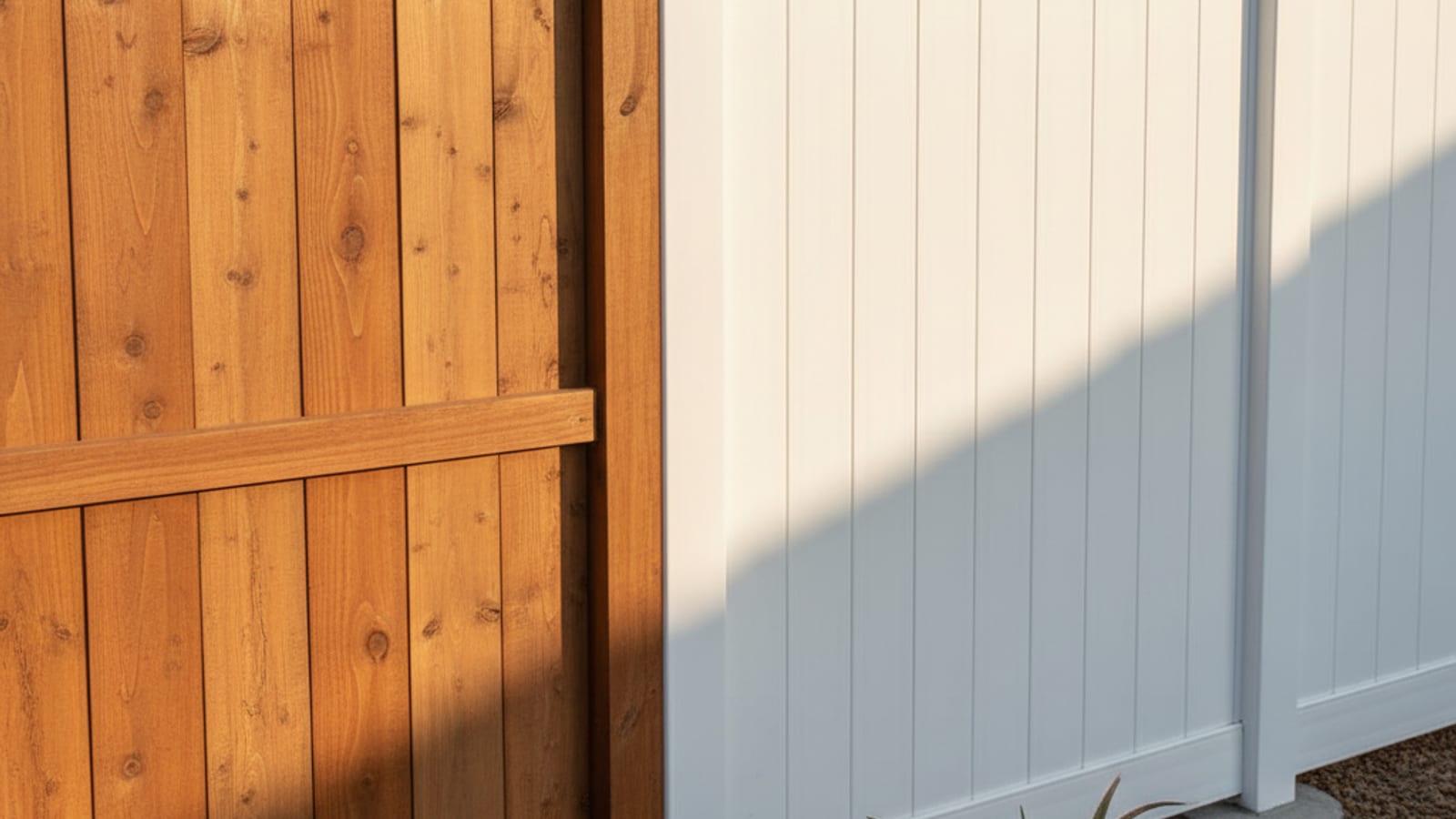
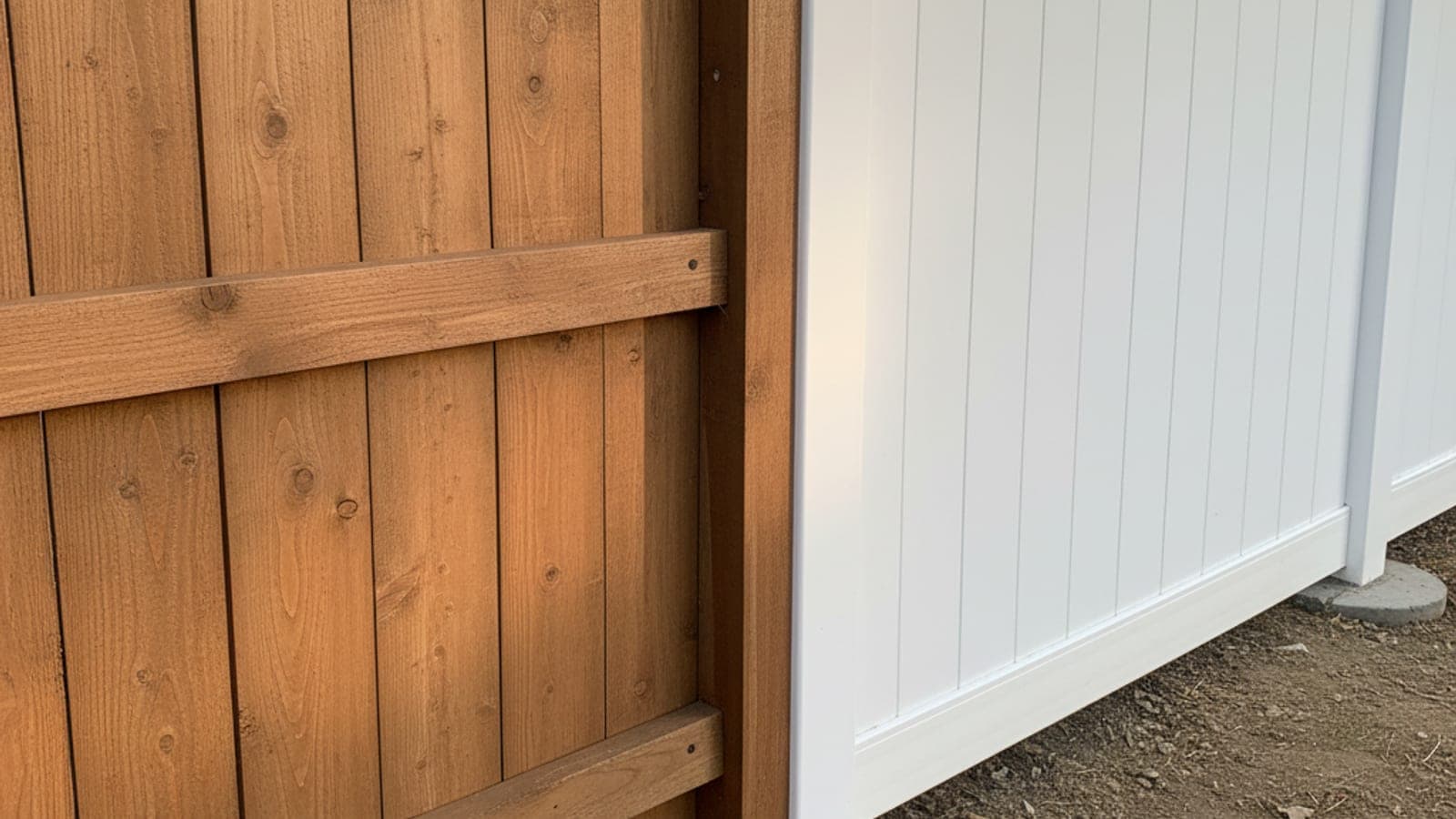
TL;DR

  • Cedar looks better, costs less up front, needs sealing every 2–3 years, and lasts 15–20 years.
  • Class-A vinyl costs 20–30% more up front, needs zero maintenance, and lasts 25+ years.
  • Over a 25-year window, vinyl is 30–40% cheaper on total cost of ownership.
  • Coastal homes: either material works if hardware is stainless.
  • East County homes: only Class-A vinyl or cedar/redwood. Pressure-treated pine fails fast here.

Every San Diego homeowner building a new fence asks the same question: cedar or vinyl? Both dominate the privacy-fence market. Both are available in 6-ft and 8-ft heights. Both come in white, tan, and a dozen stain tones. The honest answer to which is “better” depends on your yard, your HOA, and how you feel about maintenance.

Here’s the comparison nobody quite lays out in writing.

Upfront cost

For a typical 150-foot backyard privacy fence in San Diego in 2026:

  • Cedar privacy fence (1x6 dog-ear, 6-ft): $6,800–$11,500 installed.
  • Class-A vinyl privacy fence (tongue-and-groove, 6-ft, white): $8,500–$14,000 installed.
  • Class-A vinyl with woodgrain finish: $10,500–$16,500 installed.

Vinyl is 20–30% more at install for a white standard-grade fence, and 40–60% more for woodgrain or tan. Cedar wins the install-day sticker price.

Lifespan

This is where vinyl starts to close the gap.

  • Cedar: 15–20 years in San Diego with proper sealing every 2–3 years. 8–12 years if it’s never sealed.
  • Class-A vinyl: 25+ years with zero maintenance. Manufacturer warranties run 25 years (transferable on most brands).

If you stay in your house long enough to replace the fence twice, cedar would cost roughly double over the same period. In a forever-home scenario, vinyl is almost always cheaper in the long run.

Maintenance

Cedar:

  • Stain or seal every 2–3 years. Penetrating oil stain. $2.50–$4.50/linear foot labor to do it right (pressure wash, dry, stain).
  • Replace pickets that crack or warp — happens occasionally in heat or impact zones.
  • Stainless or hot-dip galvanized hardware lasts the life of the fence; zinc-plated hardware fails and leaves rust streaks.
  • Expect 1–2 days of your time (or $400–$800 in labor) every 3 years for the full fence.

Class-A vinyl:

  • Occasionally rinse with a garden hose if it gets dusty. That’s it.
  • No staining, no sealing, no rot.
  • UV-stabilized PVC won’t yellow or chalk within the warranty period.

Over a 25-year window, cedar costs roughly $3,000–$5,000 in maintenance on a 150-foot fence (8 stain jobs plus picket replacements). Vinyl costs $0.

Climate fit

San Diego isn’t one climate. Coastal Encinitas is different from inland El Cajon, which is different from mountain Julian. Material performance varies by zone.

Coastal (Encinitas, Carlsbad, La Jolla, Coronado, Imperial Beach):

  • Both work well. Vinyl has zero corrosion risk. Cedar with stainless hardware is solid.
  • Avoid: zinc-plated hardware (rusts in 2 years), pine (moisture damage).

North County Inland (San Marcos, Escondido, Poway, Vista):

  • Both work well. Cedar needs sealing within 6 months of install to survive dry heat.
  • Avoid: pressure-treated pine (cups and cracks within 2 summers).

East County (El Cajon, Santee, Lakeside, La Mesa):

  • Class-A vinyl is best. Cedar is second (must be heart cedar or redwood). UV and heat are brutal here.
  • Avoid: pressure-treated pine (fails fast), budget vinyl (warps under 110°F heat).

Mountain (Julian, Alpine, Ramona, Pine Valley):

  • Cedar works well because the mild summers and moderate winters are easy on wood. Vinyl works but some installers prefer cedar for the aesthetic fit of the mountain communities.
  • Avoid: non-UV-stabilized vinyl (sun plus occasional frost-thaw can crack it).

Chula Vista, South Bay:

  • Vinyl is dominant in the master-planned HOA tracts (Otay Ranch, EastLake). Cedar common in older west-side homes.
  • Match the neighborhood’s aesthetic — a woodgrain vinyl fence can straddle both.

Aesthetics

This is subjective but matters. Cedar has visible grain, natural color variation between boards, and a quality you can’t fake. Vinyl has uniform surface texture — even the woodgrain finishes read as “trying” if you’re close to them.

If your home is Craftsman, mid-century, ranch-style, or rustic, cedar almost always fits better. If your home is Mediterranean, contemporary, or part of a master-planned tract, vinyl can look just as intentional.

The cedar advantage:

  • Natural material, real wood grain.
  • Stainable to any color, changeable over time.
  • Patinas gracefully if you let it go gray (intentional weathered look).

The vinyl advantage:

  • Uniform clean appearance.
  • White stays white; tan stays tan.
  • Doesn’t check, warp, or cup.

HOA and neighborhood fit

Many San Diego HOAs specify one material. Some require cedar (or stained wood) to maintain a rustic aesthetic. Others require white vinyl. A few allow both. Check the CC&Rs before falling in love with one option — it might not be allowed.

For non-HOA properties, neighborhood aesthetics still matter. A vinyl fence on a street full of cedar fences can stand out. A cedar fence in a vinyl neighborhood can stand out too. If you want the property to look “of” the neighborhood, match.

Total cost of ownership, 25-year window

For a 150-foot fence in San Diego over 25 years:

Cedar:

  • Install: $9,000 (midpoint)
  • Stain/seal 8 times: $4,000–$5,500
  • Occasional picket replacement: $500–$1,200
  • Hardware replacement (if non-stainless): $300–$800
  • Total: $13,800–$16,500
  • And you’ll likely replace the fence once more in that window: add $12,000–$15,000
  • 25-year total: $25,800–$31,500

Class-A vinyl:

  • Install: $11,200 (midpoint)
  • Maintenance: $0
  • Material replacement: none (25-year warranty covers)
  • 25-year total: $11,200

Vinyl wins on 25-year cost of ownership by a wide margin. The upfront premium pays back after about year 12–14.

When wood is the right answer

Pick cedar if:

  • You want the natural wood look, with grain and color variation.
  • Your HOA specifies wood.
  • You’re in a neighborhood where vinyl would read as off-style.
  • You plan to stay under 10 years and prefer the lower upfront cost.
  • You enjoy the periodic sealing ritual or are okay hiring it out.

When vinyl is the right answer

Pick vinyl if:

  • You want to set it up once and never think about it again.
  • You’re a rental property owner (tenants never maintain wood fence).
  • You’re in the coastal salt zone and don’t want to deal with hardware corrosion.
  • You’re in East County heat where wood takes the most abuse.
  • Your HOA specifies vinyl.
  • Your 25-year math is important to you.

The “best of both” option

If you want the visual of wood without the maintenance, woodgrain-finish Class-A vinyl is the middle path. It reads as cedar from 10 feet, lasts 25+ years, and needs zero maintenance. Costs 15–25% more than standard white vinyl but still cheaper long-term than cedar with maintenance costs factored in.

The finishes have gotten good. Brown/cedar woodgrain, walnut, and driftwood tones are common options now. Not invisible up close, but at 10 feet on a 150-foot property line, they work.

What we quote

When homeowners call us without a material preference, we walk the yard, pull the HOA CC&R if applicable, and write two quotes — one cedar, one vinyl — with line items for material grade, post depth, hardware spec, and expected maintenance. You compare them on total cost and pick what fits.

We don’t steer toward the more expensive option by default. The right answer depends on your home, your timeline, and your maintenance appetite — not on our preference.