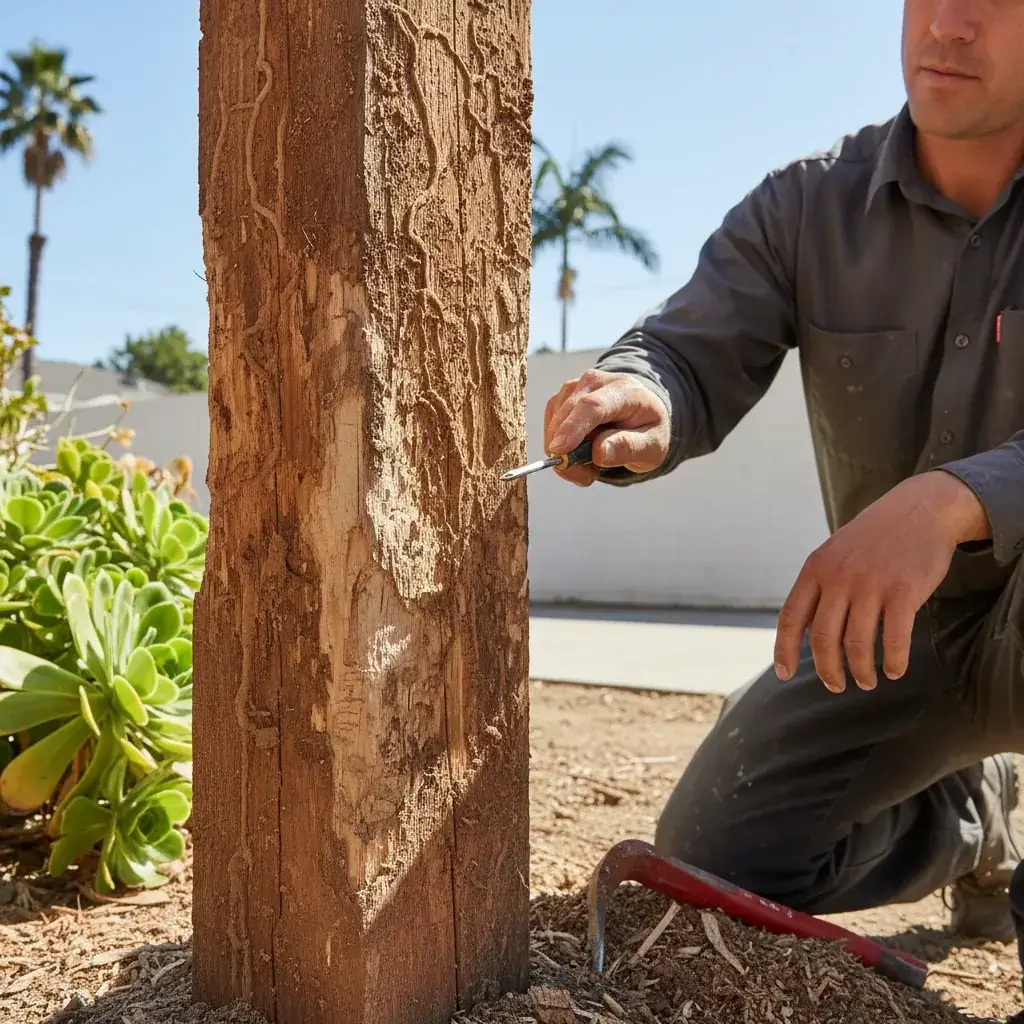
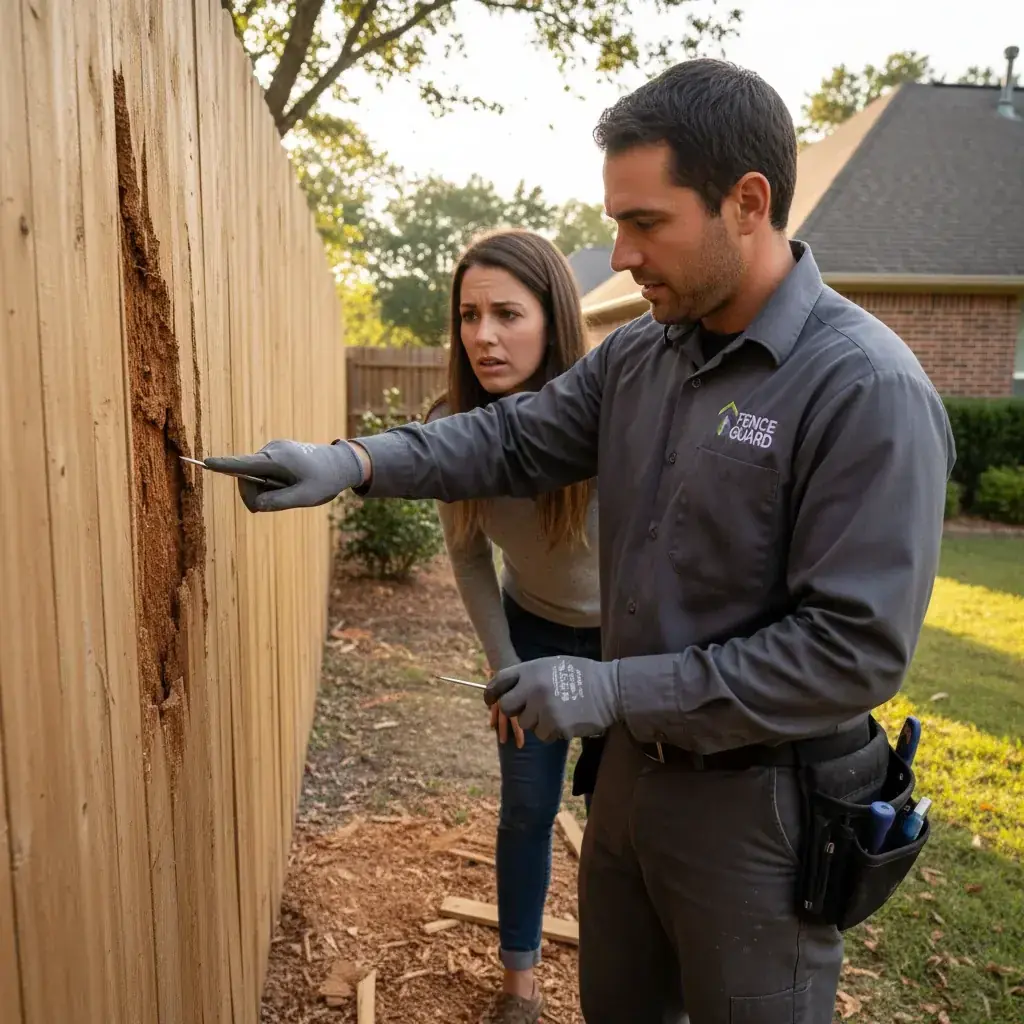
If termite damage is confined to one or two posts, repair is almost always the right call, with post replacement running $250 to $500 per post in San Diego. Once termites have compromised more than 25 to 30 percent of your fence, a full replacement at $35 to $65 per linear foot makes more sense than patching a failing structure. The decision comes down to how far the damage has spread, and a quick screwdriver test along every post tells you a lot before you call anyone.
Subterranean termites are common throughout San Diego County, and wood fences are an easy first target because the posts sit in moist soil. Before any fence work begins, a licensed pest control company needs to treat the colony. Once the infestation is gone, this guide gives you a clear framework for deciding what to do about the wood.
How to spot termite damage on fence posts and panels
Termites are sneaky, but they leave behind distinct clues. Knowing what to look for is the first step in assessing the extent of the problem. In San Diego, we primarily deal with subterranean termites, which build their colonies in the soil and travel up into wood structures to feed.
Here are the key signs of termite damage on your wood fence:
- Mud Tubes: These are the most obvious giveaway. Subterranean termites build pencil-sized tunnels from soil, wood, and saliva to protect themselves from open air as they travel from their colony to your fence. Look for these tubes on foundation slabs, and especially near the base of your fence posts where they meet the ground or concrete footing.
- Hollow-Sounding Wood: Tap your fence posts and panels with the handle of a screwdriver. Healthy, solid wood will make a dull thud. Wood that has been hollowed out by termites will produce a noticeably empty, papery sound.
- Visible Tunnels or “Galleries”: If a piece of the fence is already broken, look inside. Termites eat wood from the inside out, following the grain. You’ll see a maze-like network of hollowed-out channels, often still containing bits of soil and mud.
- Blistering or Darkened Wood: As termites consume the interior of a post or picket, they can leave the thin outer layer of wood or paint intact. This can create a blistering or bubbling effect on the surface. Sometimes the wood will also appear darker in patches.
- Crumbling Wood at the Base: The base of fence posts is the most common point of attack. Probe the bottom of the posts gently with a screwdriver. If it’s soft, spongy, or crumbles easily, you likely have a significant termite or rot problem.
- Termite Swarms: Seeing a swarm of winged termites on or near your fence (especially after a rain) is a sure sign of a mature colony nearby.
Before you call a fence contractor, it’s crucial to contact a licensed pest control company like Pest Pros San Diego. They need to treat the source of the infestation. We can fix the wood, but they’re the experts who make sure the termites are gone for good.
When a simple post or panel replacement is enough
The good news is that not every case of termite damage requires a brand-new fence. If you’ve caught the problem early, a targeted repair is often the most practical and affordable solution. The key is that the damage must be isolated and the rest of your fence must be structurally sound.
A simple repair is likely sufficient in these scenarios:
- Damage is confined to one or two posts: This is the most common repair scenario. Termites often attack a single post where moisture is highest. If the surrounding panels and posts are still solid, a professional fence post repair is the perfect fix. We can dig out the old, compromised post and its concrete footing, and set a new, properly treated post to restore the fence’s stability.
- A few pickets or one panel is affected: Sometimes termites will only damage a small section of a fence panel or a handful of non-structural pickets. As long as the posts and rails supporting that section are solid, these components can be replaced individually.
- The infestation was caught very early: If your pest control expert confirms the termite activity was new and limited, and the damage is minimal, you can proceed with confidence. The goal is to remove the compromised wood and ensure the rest of the structure is secure.
The main principle here is containment. If the damage hasn’t spread to compromise the overall integrity of the fence line, a localized fence repair is an excellent choice. It saves you money, creates less waste, and can be completed much faster than a full replacement. A professional assessment can confirm if the rails, stringers, and adjacent posts are strong enough to justify a repair.
The point of no return: signs you need a full fence replacement
While we always prefer to save a homeowner money with a repair, there comes a point where it’s no longer a safe or financially sensible option. Patching up a fence that is failing systemically is just throwing good money after bad. A full replacement becomes necessary when the structural integrity of the entire fence is in question.
Here are the clear signs that you’ve reached the point of no return:
- Widespread Damage: If you find evidence of termites in more than 25-30% of your fence posts or panels, the infestation is likely extensive. Making scattered repairs across the entire fence line is impractical and often costs nearly as much as starting fresh.
- Multiple Structural Posts are Compromised: The posts are the backbone of your fence. If three, four, or more consecutive posts are hollowed out, soft, or leaning, the entire fence is at risk of collapse, especially in a Santa Ana wind event.
- The Fence is Sagging or Leaning: A noticeable sag or lean is a red flag that the support system has failed. This usually means multiple posts and potentially the horizontal rails have been weakened by termites or rot.
- Wood is Soft and Crumbly: If you can easily push a screwdriver or even your finger into the wood on multiple posts and panels, the wood has lost its strength. It can no longer hold nails or screws securely, making any repair attempt temporary at best.
- The Fence is Old: An older fence (15+ years) that has widespread termite damage is often not worth saving. The wood has already been weakened by years of exposure to the San Diego sun and moisture, and a termite infestation is often the final blow.
In these situations, investing in a new wood fence installation is the smartest long-term decision. It allows you to start over with properly treated materials and ensure your property is secure for years to come.
Cost of termite-damaged fence repair in San Diego
Understanding the potential costs can help you budget and make an informed decision between repair and replacement. Prices can vary based on materials, labor, and the extent of the damage, but we can outline the key factors that influence the final cost.
For a Fence Repair:
The cost of a repair is primarily based on the number of components being replaced and the labor involved.
- Post Replacement: This is the most common termite-related repair. The cost for replacing a single wood fence post in San Diego typically ranges from $250 to $500. This includes the new post (usually pressure-treated), concrete, labor to remove the old footing and set the new one, and re-attaching the fence panels.
- Panel or Picket Replacement: Replacing a few pickets or a small section of a panel is less expensive. The cost is driven by the type of wood (cedar is more expensive than pine) and the time it takes to match and install the new pieces. This could range from $150 to $400 depending on the scope.
For a Full Fence Replacement:
The cost of a full replacement is calculated by the linear foot.
- Linear Foot Pricing: A new wood privacy fence in San Diego generally costs between $35 and $65 per linear foot. This price includes all materials, tear-down and disposal of the old fence, and complete installation.
- Influencing Factors: The final price per foot depends on:
- Wood Type: Redwood and cedar are popular, durable choices in San Diego but cost more than pressure-treated pine.
- Fence Height: A 6-foot fence will cost more than a 4-foot fence.
- Complexity: Adding gates, lattice tops, or building on a steep slope will increase labor costs.
- Access: Difficult-to-access job sites can also impact the price.
When comparing costs, consider the breakeven point. If you need to replace four or five posts and several panels, the total cost of repairs could easily exceed $1,500. A full replacement for a small-to-medium yard might start around $3,500-$5,000, offering a completely new, secure structure with a long lifespan. The best way to get an accurate number is with a professional, on-site estimate.
Frequently asked questions
How much does it cost to repair termite damage on a wood fence in San Diego?
Replacing a single termite-damaged post in San Diego typically runs $250 to $500, including the new pressure-treated post, concrete footing, labor, and reattaching the panels. Replacing a small section of pickets or one panel generally costs $150 to $400 depending on the wood type and scope. If you need four or more posts replaced, those repair costs often approach the starting price of a full replacement, which is worth discussing with a contractor before committing.
When should I replace my whole fence instead of repairing termite damage?
Replace the whole fence when termites have damaged more than 25 to 30 percent of your posts or panels, when multiple consecutive posts are soft or leaning, or when the fence is already 15-plus years old. At that level of damage, scattered repairs rarely hold up, and the total cost often exceeds $1,500 while still leaving a structurally weak fence. A new wood fence installation gives you properly treated lumber and a fresh start.
Do I need a permit to replace a fence damaged by termites in San Diego?
Most residential fence replacements in San Diego do not require a permit if the fence stays at or under six feet tall along a property line. Taller fences, fences in front yards, or fences near easements may require City approval. Your fence contractor can confirm what applies to your specific property before work begins.
How can I tell if my fence posts have termite damage without taking them apart?
Tap each post firmly with a screwdriver handle and listen for a hollow, papery sound instead of a solid thud. Then press the tip of the screwdriver into the wood near the base. Healthy wood resists the pressure; termite-damaged wood feels soft or spongy and may crumble. Look for pencil-thick mud tubes running from the soil up onto the post, which are the clearest sign of subterranean termite activity.
What wood is best for replacing a termite-damaged fence in San Diego?
Pressure-treated pine is the most common replacement choice because the chemical treatment makes it resistant to termites and moisture. Cedar and redwood are naturally more resistant than untreated pine and hold up well in San Diego’s coastal climate, though they cost more. Whichever species you choose, make sure posts are rated for ground contact (UC4B or UC4C) so the treatment extends through the portion buried in soil.
Will termites come back after I repair or replace my fence?
Termites can return if the colony was not fully treated or if new colonies move in over time. That’s why pest control treatment must happen before any fence work, not after. Ongoing measures that reduce risk include using pressure-treated or naturally resistant wood, keeping soil and mulch away from fence posts, and checking posts once a year for new mud tubes or soft spots. A fence repair or replacement fixes the damaged wood; a licensed pest control company handles the long-term prevention.
When to call us
Deciding between repair and replacement for a termite-damaged fence can be stressful. If you’ve identified signs of termites, dealt with the pest control, and are now facing compromised wood, we can help. A professional on-site assessment is the best way to understand your options and get a clear, upfront price.
Call us at (858) 925-5546 for a same-day estimate.