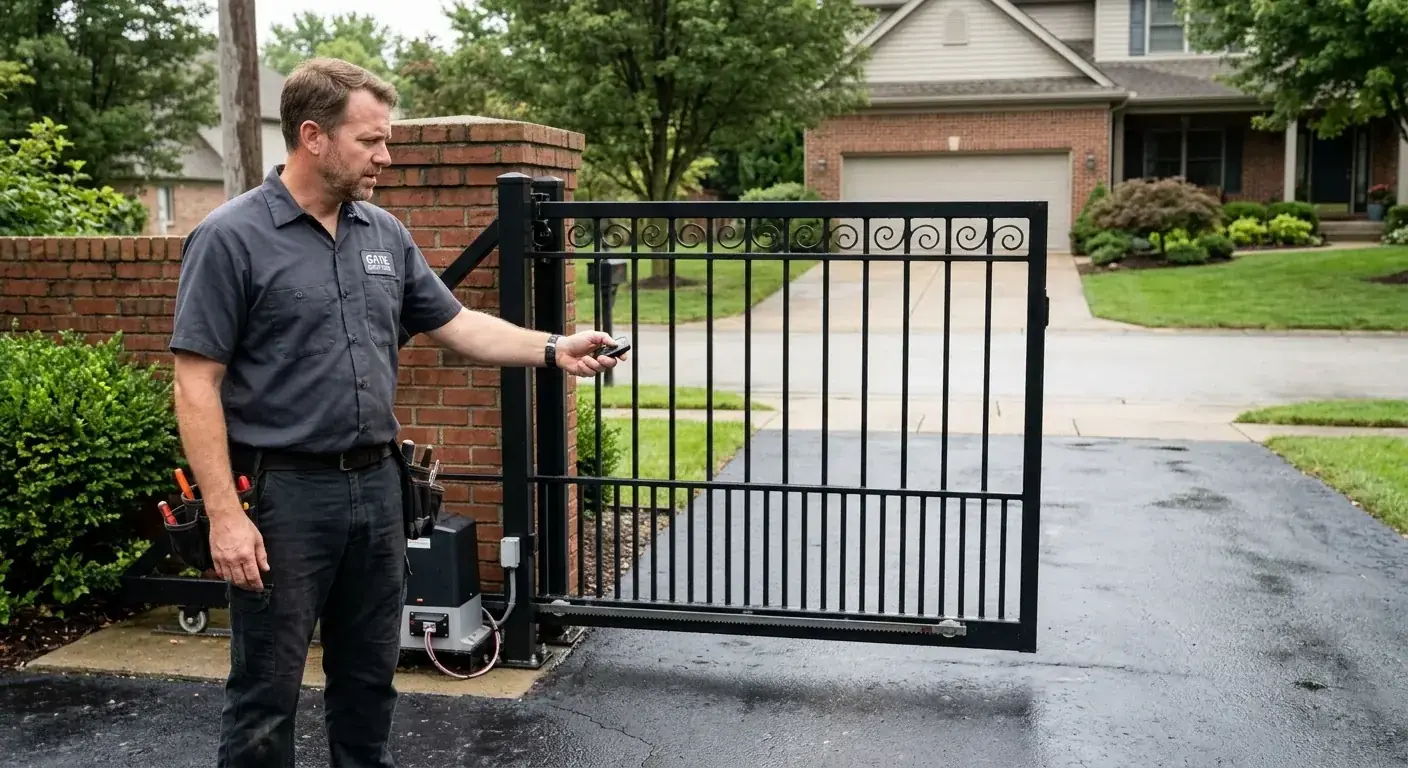
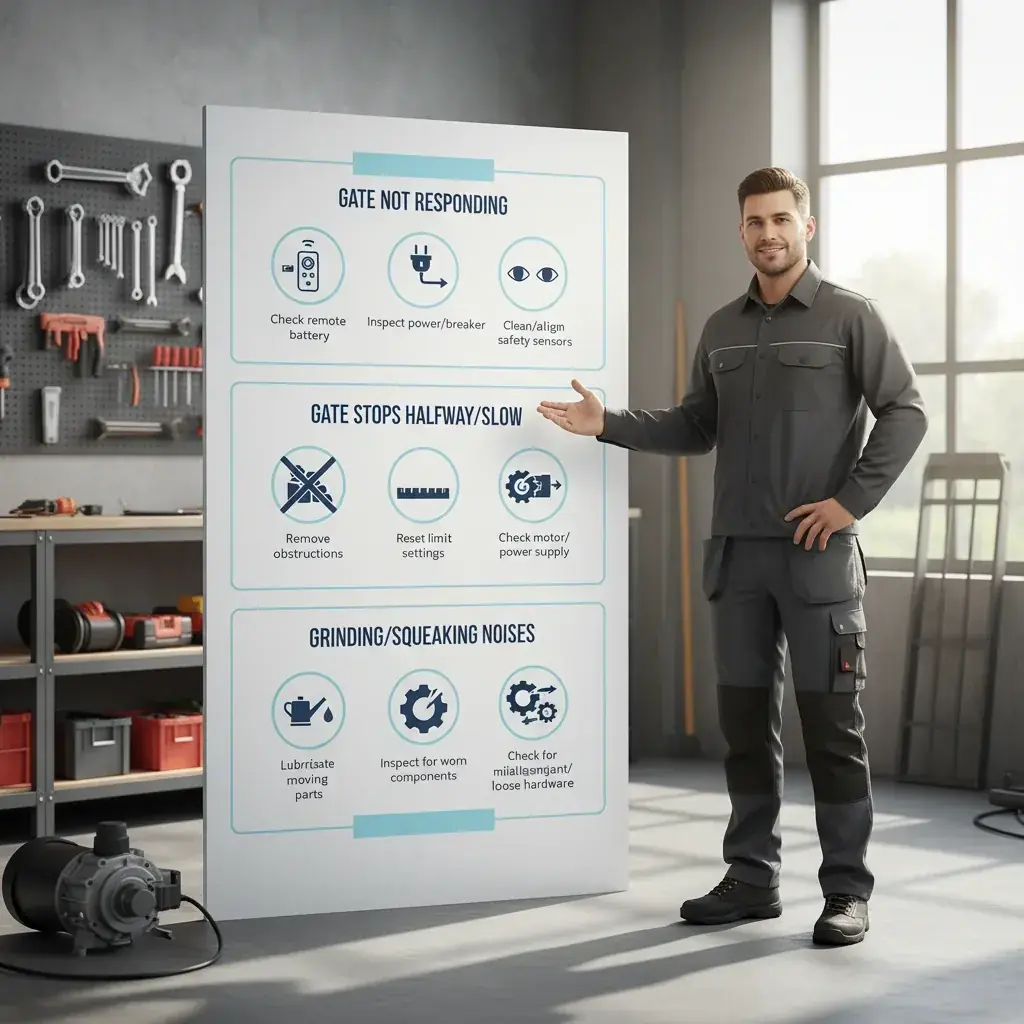
Most automatic gate opener problems trace back to four causes: dead remote batteries, a tripped circuit breaker, dirty or misaligned safety sensors, or mechanical friction from lack of lubrication. Start with those four checks before assuming anything is seriously wrong. This guide walks you through diagnosing each issue in order, and flags which problems are safe to fix yourself versus which ones need a licensed pro.
Why your gate opener isn’t responding (remotes, power, and sensors)
When your automatic gate doesn’t budge, the problem often lies with the most basic elements: your remote, the power supply, or the safety sensors. These are the easiest starting points for troubleshooting.
First, check your remote control. It sounds simple, but a dead battery is a frequent culprit. Replace the batteries and try again. If you have multiple remotes, test them all. A single faulty remote might mean it needs reprogramming or replacement. Make sure you’re within the appropriate range and that there isn’t anything blocking the signal between the remote and the gate opener’s receiver. Large vehicles or new structures can sometimes interfere. If it’s a keypad, try entering the code carefully and ensure the keypad itself isn’t damaged or dirty.
Next, investigate the power supply. Automatic gates run on electricity, so a power interruption will stop them cold. Check your home’s circuit breaker panel for a tripped breaker dedicated to the gate. If it’s tripped, flip it off then back on. Sometimes, simply unplugging the gate opener for a minute and plugging it back in can reset it, much like restarting a computer. If the gate has a manual override, you can use it to open or close the gate by hand while you diagnose the power issue. For sliding gates, this often involves a key to disengage the motor, allowing you to slide the gate freely. Swing gates usually have a pin or lever to release them.
Finally, inspect your gate’s safety sensors. Most modern automatic gates have photoelectric sensors (often called “photo eyes” or “infrared sensors”) installed on either side of the gate opening. These emit an invisible beam that, if broken, prevents the gate from closing, acting as a crucial safety feature to prevent the gate from closing on a person or vehicle. Check for obstructions like leaves, spiderwebs, dirt, or even small animals blocking the beam. Sometimes, the sensors can become misaligned. Gently adjust them to ensure they’re perfectly facing each other. You’ll often see an indicator light on the sensor itself that will illuminate or change color when the beam is properly aligned. Wiping the lenses clean with a soft cloth can often resolve sensor issues. If the gate opens but refuses to close, these sensors are usually the first place to look.
Fixing a gate that stops halfway or moves too slowly
A gate that opens partially or moves at a snail’s pace is annoying and usually indicates a different set of issues than a completely unresponsive gate. This could range from simple obstructions to more complex mechanical or electrical problems within the opener system.
Start by thoroughly inspecting the gate’s path for any physical obstructions. Even a small rock, a branch, or accumulated debris can impede a sliding gate’s wheels or a swing gate’s arm. Clear anything that might be in the way. For sliding gates, pay close attention to the track and rollers. Any damage to the track or sticky rollers can cause friction, slowing the gate or bringing it to a halt. If your fence gate won’t latch or fully close, a minor obstruction or misalignment could be the reason.
Automatic gate openers have “limit settings” that tell the gate how far to open and close. If these settings are off, the gate might stop prematurely. Refer to your opener’s manual for instructions on how to reset or adjust these limits. This process typically involves pressing specific buttons on the opener’s control board and manually moving the gate to the desired open and closed positions. Incorrect limit settings are a common reason for a gate stopping halfway.
Another possibility is a struggling motor or low power. If the gate is moving very slowly or seems to strain, the motor might be overheating, or it might not be receiving sufficient voltage. Overheating can occur if the gate is cycled too frequently or if there’s excessive friction in the gate’s movement. Let the motor cool down for a while and try again. Low voltage could stem from wiring issues or a problem with the main power supply to the opener. While a multimeter can check voltage, it’s often best to leave electrical diagnostics to a professional to avoid safety hazards. Wear and tear on the motor itself can also contribute to slow operation, especially in older units exposed to San Diego’s coastal climate.
What to check when your gate makes grinding or squeaking noises
Unusual noises from your automatic gate are a clear sign that something is amiss. Grinding, squeaking, or groaning sounds typically point to mechanical friction, worn parts, or misalignment. Addressing these issues early can prevent more significant damage and costly repairs down the line.
Lack of lubrication is a frequent cause of squeaks and groans. Automatic gates, like any mechanical system with moving parts, require regular lubrication to operate smoothly. Pay attention to the hinges on swing gates, the rollers on sliding gates, and any chains or gears within the opener mechanism. Use a silicone-based lubricant or a manufacturer-recommended product, never grease that can attract dirt. Apply it generously to all friction points and cycle the gate a few times to work the lubricant in. Regular maintenance, including lubrication, can significantly extend the life of your gate system in San Diego’s varying weather conditions.
Worn components are another common source of noise. Over time, parts like gears, bearings, and rollers can wear out, especially under the heavy load of a large driveway gate. Grinding noises often indicate metal-on-metal contact due to worn gears or bearings that need replacement. Squeaking might come from worn rollers that are no longer spinning freely. Visually inspect these components for signs of corrosion, rust, or excessive wear. If you see visibly damaged parts, they’ll need to be replaced. For many homeowners, replacing these internal components means calling a professional because it requires specific tools and expertise.
Misalignment can also create noise and strain on the system. For sliding gates, the track might be bent or uneven, causing the gate to rub against its supports. For swing gates, hinges might be loose or out of plumb, making the gate sag or drag. Check that the gate itself is level and that there’s no excessive play in the hinges or rollers. Loose hardware, such as bolts holding the gate or the opener to their mounts, can also contribute to rattling or grinding sounds. Tighten any loose bolts or screws you find, but be careful not to overtighten and strip them. Addressing alignment issues often requires a bit more mechanical know-how and could be a job for experienced gate installation and automation professionals.
Frequently asked questions
Why does my automatic gate open but not close?
A safety sensor issue is the most common reason. The photoelectric beam on one side of the gate is being blocked or the sensors have drifted out of alignment. Clear any leaves, debris, or spiderwebs from the sensor lenses, then gently adjust the sensors until the indicator light shows the beam is re-established. If cleaning and realigning don’t fix it, the sensors may need replacement.
How much does automatic gate repair cost in San Diego?
Most residential automatic gate repairs in San Diego run between $150 and $600, depending on the problem. A remote reprogramming or sensor cleaning is on the low end. Replacing a motor or control board typically falls in the $300 to $600 range. See our detailed gate repair cost in San Diego breakdown for a full price guide.
How long does an automatic gate opener last?
A well-maintained automatic gate opener lasts 10 to 15 years on average. San Diego’s coastal salt air accelerates corrosion on exposed metal components, so openers near the coast tend to wear faster without regular lubrication and cleaning. Annual maintenance extends life significantly.
Does my automatic gate need a permit in San Diego?
New automatic gate installations on residential properties generally require a permit in San Diego County if the gate is part of a fence or wall over a certain height or if electrical work is involved. Repairs and like-for-like replacements often don’t. Your gate installation contractor can confirm what’s required for your specific project before work starts.
Can I troubleshoot my automatic gate myself, or do I need a pro?
Battery swaps, sensor cleaning, lubrication, and limit-setting adjustments are reasonable DIY tasks for most homeowners. Anything involving the control board, wiring, or motor replacement carries real electrical risk and should go to a licensed contractor. When in doubt, call a pro rather than risk damaging the opener or voiding the warranty.
How often should I service my automatic gate opener?
Once a year is the standard recommendation. A basic service includes lubricating hinges, rollers, and the drive chain or arm; cleaning sensor lenses; testing the manual release; and checking all limit settings. Coastal San Diego properties benefit from servicing every six months because salt air speeds up corrosion.
When to call us
While many minor automatic gate problems have straightforward fixes, there are times when professional intervention is essential. If you’ve tried the troubleshooting steps above and your gate is still malfunctioning, or if you’re uncomfortable dealing with electrical components or heavy mechanical systems, it’s time to call in the experts. Ignoring persistent issues can lead to further damage, safety hazards, and potentially higher repair costs.
Complex electrical issues, such as faulty wiring, control board malfunctions, or motor burnout, should always be handled by licensed professionals. Working with high voltage electricity without proper training is extremely dangerous. Similarly, if your gate has sustained structural damage, or if heavy components like the motor or gate itself need replacement, a professional has the specialized tools, experience, and manpower to safely and effectively complete the repair. Understanding the potential gate repair cost in San Diego can help you budget for professional service and ensure you’re making an informed decision about repair versus replacement.
At Fence Pros San Diego, we’re dedicated to ensuring your automatic gate operates smoothly and safely. We have the expertise to diagnose intricate problems, perform necessary repairs, and even advise on upgrades or new installations. Don’t let a malfunctioning gate compromise your property’s security or your peace of mind. Always verify your contractor’s license with the California Contractors State License Board (CSLB) at cslb.ca.gov.
Call us at (858) 925-5546 for a same-day estimate.