Prepare for a pool-barrier compliance check
Pool-barrier rules depend on the project and applicable requirements. Gather the design and product details for the local building official and contractor; this checklist is not a compliance certificate.
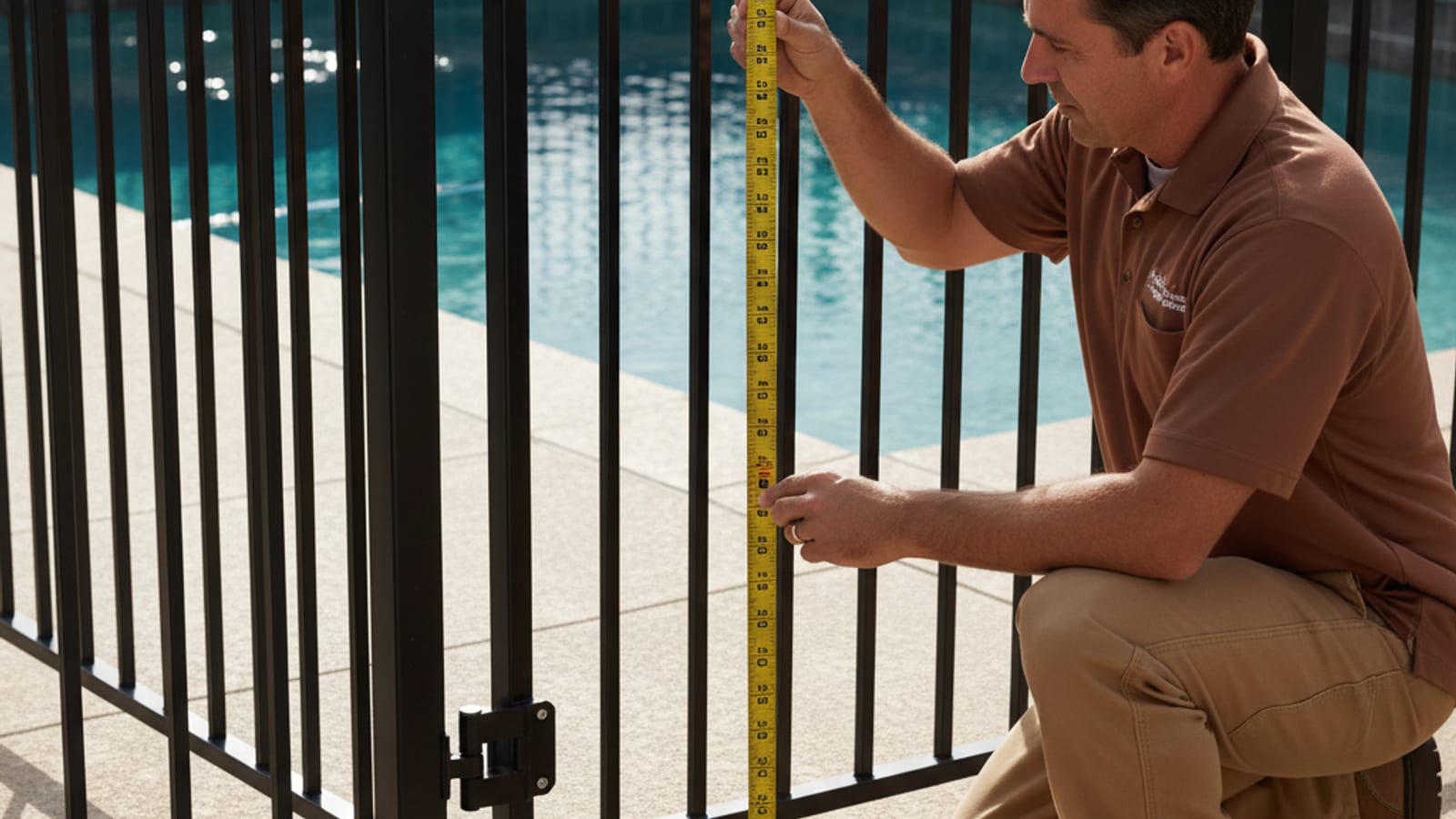
What you'll learn
- Why the project scope determines which safety features apply
- What barrier and gate dimensions to document
- Why removable mesh has a separate statutory standard
- Which questions to take to the local building official
Project checklist
- Identify the property jurisdiction, pool type, and whether the work is new construction, remodeling, or an existing-barrier repair.
- Record the barrier material, product, height, ground clearance, openings, and gate details from a safe location.
- For an enclosure under California Health and Safety Code 115923, review the 60-inch minimum height, 2-inch maximum ground clearance, 4-inch sphere rule, gate requirements, and exterior climbability criteria.
- Check section 115922 for the required combination of safety features on covered projects; removable mesh is a separately listed option with specific requirements.
- Ask the local building official to confirm the applicable code, permits, safety features, and inspection process before treating the design as compliant.
A pool barrier is one part of a safety plan. A general video or home checklist cannot determine compliance for every property. Address a gate that will not close or latch with a qualified professional and prevent unsupervised pool access.
Prefer an independent professional for the work
Fence planning and repair across San Diego County. Leave a message and we match you with a local pro.
Keep learning.

Stain and seal a wood fence
A fence finish needs preparation that matches the wood and existing coating. Use the chosen product’s instructions to plan cleaning, drying, application, and future care.
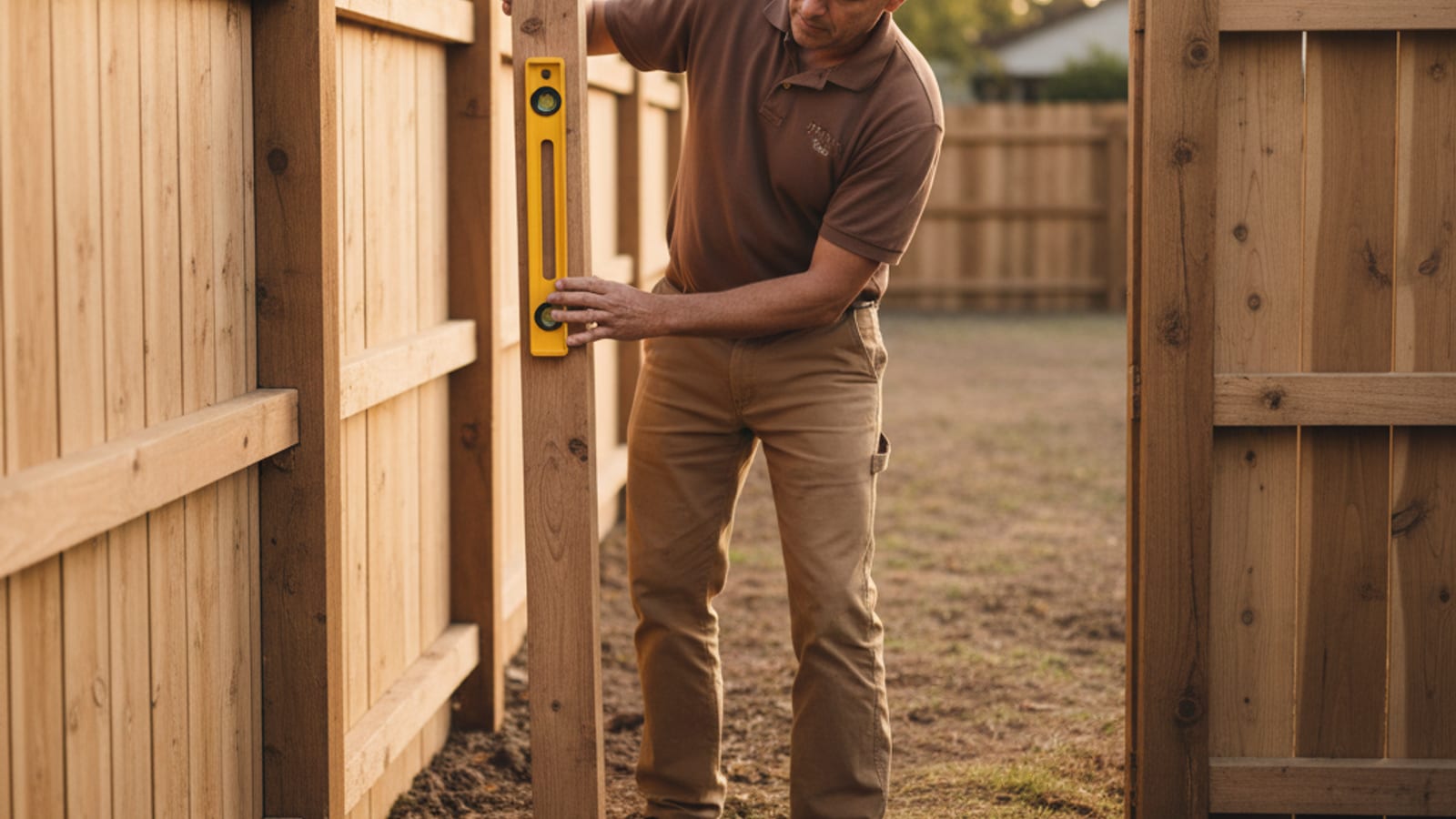
Assess a leaning fence before repair
A leaning section needs a cause identified before it is straightened. Posts, footings, connections, and surrounding ground may all need inspection. Use these observations to explain the problem to a contractor.
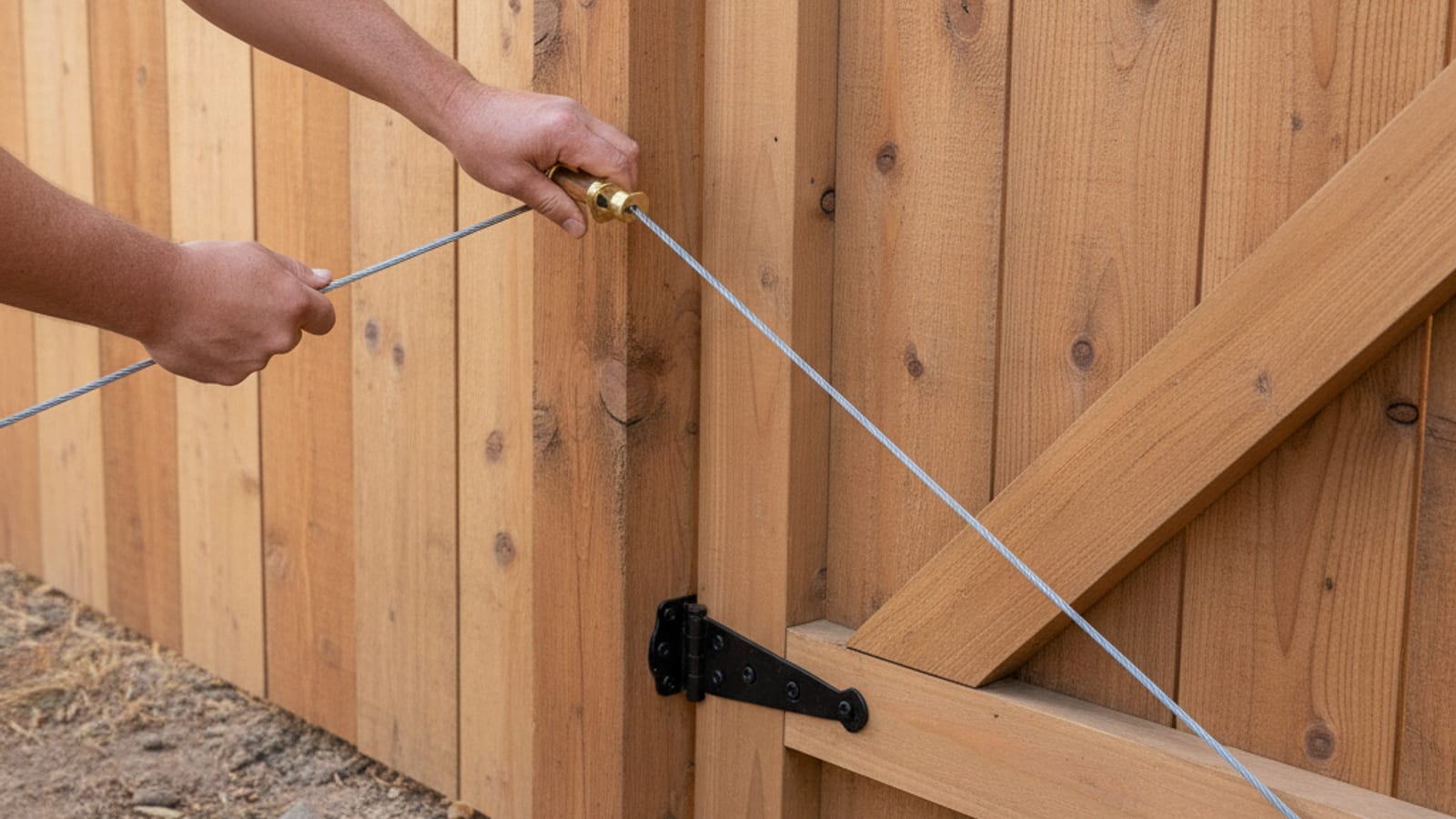
Assess a sagging gate
A dragging gate can involve post movement, loose connections, or a distorted frame. Start by documenting what changed; choose a repair only after the supporting parts are assessed.