The side gate that used to click shut in Pacific Beach or Santee can start to miss by a finger width. A warped wood gate twists through the rails, the latch bar no longer meets the strike, and the bottom rail scuffs the pad. That mix of twist, sag, and miss is what a licensed fence contractor sorts before anyone talks about a new leaf.
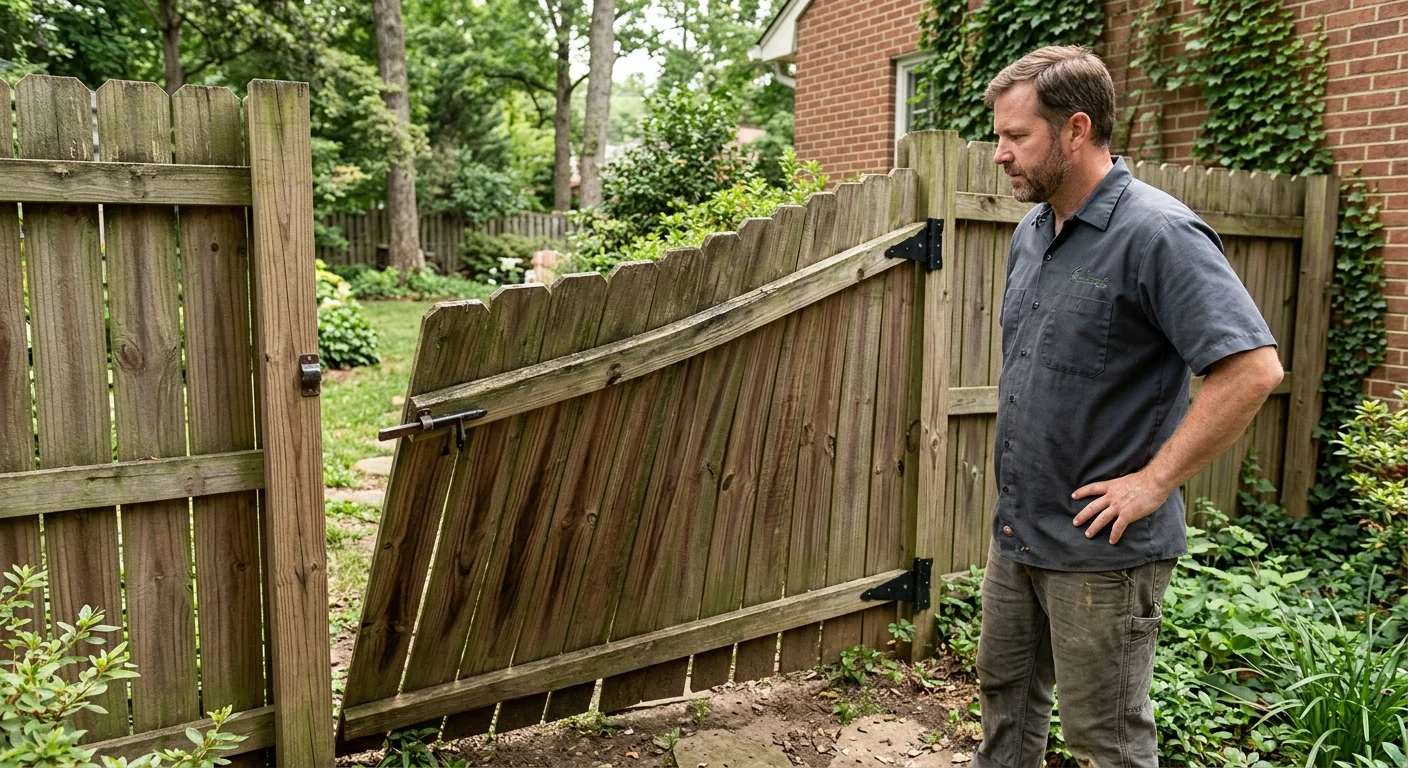
What warp, sag, and latch miss-alignment can indicate
Three different failures can look like one stuck gate.
Warp is a twist in the leaf itself. Stand at the latch post and sight along the top rail. If the hinge side and the latch side aren’t in the same plane, the boards have moved. In San Diego County this shows up on gates that take sun on one face and marine layer or irrigation on the other. A west-facing Encinitas or Imperial Beach gate can stay damp on the ocean side while the yard side bakes. An inland gate in El Cajon or Escondido sees hotter, drier air and bigger day-to-night swings. Uneven moisture is enough to throw a leaf out of plane.
Sag is different. The leaf stays relatively flat, but the latch corner drops. You see a growing gap at the top latch side and a scrape at the bottom. Hinge screws walking out of the post, a failed or missing diagonal brace, or a hinge post that has started to lean can all drop that corner. Sag can live in the leaf, the post, or both.
Latch miss-alignment is the symptom people notice first. The bar hits high, low, or short of the strike. That miss can come from warp, sag, a leaning strike post, or hardware that has shifted. If the leaf still looks square and the posts still look plumb, the problem may be the latch set, not the wood. That narrower case is covered in why a fence gate will not latch. This page is for the warped fence gate that has actually changed shape.
If the leaf is a pool barrier, California Health and Safety Code section 115923 calls for gates that open away from the pool, self-close, and self-latch, with the latching device at least 60 inches high on the enclosures that statute covers. A twisted leaf can stop a closer from finishing. Confirm the current text for your pool type.
Why the gate leaf, posts, and hardware need one inspection
Planing the latch edge or swapping a handle doesn’t tell you if the hinge post has rolled. A licensed C-13 fencing contractor is authorized in California to construct, erect, alter, or repair gates, among other fence work. The useful visit is one look at the whole assembly: leaf, both posts, hinges, latch, closer if there is one, and the ground it swings over.
The hinge post is the load path. If that post is out of plumb, the leaf will rack even when the wood is still true. Coastal fill in Mission Beach, sandy South Bay yards, and irrigation against a post in Rancho Bernardo can loosen a footing without obvious rot at eye level. The strike post can lean the other way and throw the latch even when the leaf is fine.
Hardware tells its own story. Salt air along La Jolla, Coronado, and Imperial Beach chews through light hinges and screws. Fasteners rust, swell, and bind. A hinge that has pulled its screws leaves oval holes in the post. Driving those screws back into the same holes doesn’t restore the original plane.
The leaf still needs its own check. Look at both faces, the top and bottom rails, the brace, and the joints where rails meet stiles. A gate built without a proper diagonal, or with a brace running the wrong way, will drop under its own weight. That’s sag from how it was built, not from climate. A contractor who only photographs the latch will miss it.
Ask the pro you’re matched with to open and close the gate through a full swing, then hold it at a few points and watch the gaps. A fence repair visit that treats the gate as part of the run is the one that can tell warp from a leaning line.
When repair and replacement each deserve a proposal
Repair is on the table when the twist is limited, the rails are sound, and both posts are still doing their job. A contractor may talk about re-hanging the leaf, replacing hinges, adding or correcting a brace, or building a new leaf on the existing posts. Those stay repair-class decisions when the posts and footing remain.
Replacement of the leaf, the posts, or the whole opening deserves its own written proposal when the wood has twisted through the rails, joints have opened, rot shows at the bottom rail, or the same gate has already been re-hung and moved again. A new leaf on tired posts just repeats the miss. That’s when gate installation belongs in the conversation, not only a patch.
Keep this decision narrower than a full fence teardown. A single walk-through can fail while the rest of a cedar or redwood run is still serviceable. The broader fence question lives on our wood fence repair versus replacement guide. Use that when adjacent panels are cupping or posts are rolling. Use this page when the gate is the problem.
Don’t treat a bid as a reason to skip licensing. California Business and Professions Code section 7048 sets a $1,000 aggregate threshold, labor and materials together, for the casual-work exemption, with limits. The work has to be casual, minor, or inconsequential. It can’t require a building permit. Contracts can’t be split to stay under the number. A person who advertises as a contractor doesn’t get the exemption. Check the current statute if a bid sits near that line. For advertised wood gate repair, you want a licensed contractor. Confirm the license on the CSLB license check.
If the gate sits in a shared boundary fence, Civil Code section 841 still governs notice and cost sharing for that fence. A 30-day written notice with the problem, the proposed fix, estimated costs, a sharing plan, and a timeline is the statutory pattern when you’ll incur costs. The statute is about landowners, not the City.
What photos help a gate pro assess the leaf
A clear photo set keeps the first conversation specific.
Shoot the gate closed from the yard side and from the street side, full height, with the latch post in the frame. Add a tight shot of the latch and strike, and another of both hinges. Get the bottom rail against the pad or soil so the scrape or the gap is visible. Stand to the side and shoot down the fence line so a leaning post shows against the panels.
Photograph both faces of the leaf in raking light. Twist and cup read better when the sun is low, which on a west-facing San Diego gate is late afternoon. Include the tops of the posts, any rot, rust stains, and oval screw holes.
If you have a level, a photo of it against the hinge post and against the strike post is useful. That’s a clue, not a survey.
Note the facing: ocean, canyon, or inland heat. Note irrigation heads that spray the leaf. Note whether the gate is a pool barrier. A contractor looking at an Oceanside yard needs that context. A generic how-to never will.
Send the same set to each contractor you compare, so the proposals answer the same leaf.
How to compare two wood gate repair proposals
Line the scopes up, not the adjectives.
One proposal should say what happens to the leaf, the posts, the hinges, the latch, and the closer. If one bid rebuilds the leaf and the other only resets hardware, they aren’t the same job. Ask what wood and what hardware they intend to use, and whether a new leaf will match the existing fence on the street face.
Ask whether the posts stay. A low number that leaves a rolled hinge post in place isn’t a saving. Ask how they will confirm the opening is square before they hang anything.
Check each firm on the CSLB site. C-13 is the fencing classification that names gates. Confirm the license is current and matches the name on the proposal.
Read the exclusions. Ground work, concrete, matching stain, and any operator on a driveway leaf are easy to leave out. This article is about a wood walk-through that has warped. Driveway operators and general gate repair in San Diego are separate jobs with their own failure modes. Don’t let a warped-leaf proposal quietly become a different project.
Get the scope in writing. You contract with the licensed contractor, not with Fence Pros San Diego. We match you with independent local pros. They do the work. You pay them.
When to call us
When a wood gate has twisted, dropped, or stopped meeting the latch, a licensed fence contractor should inspect the leaf, posts, and hardware together. Call us at (858) 400-4906 and we’ll connect you with a licensed fence contractor.