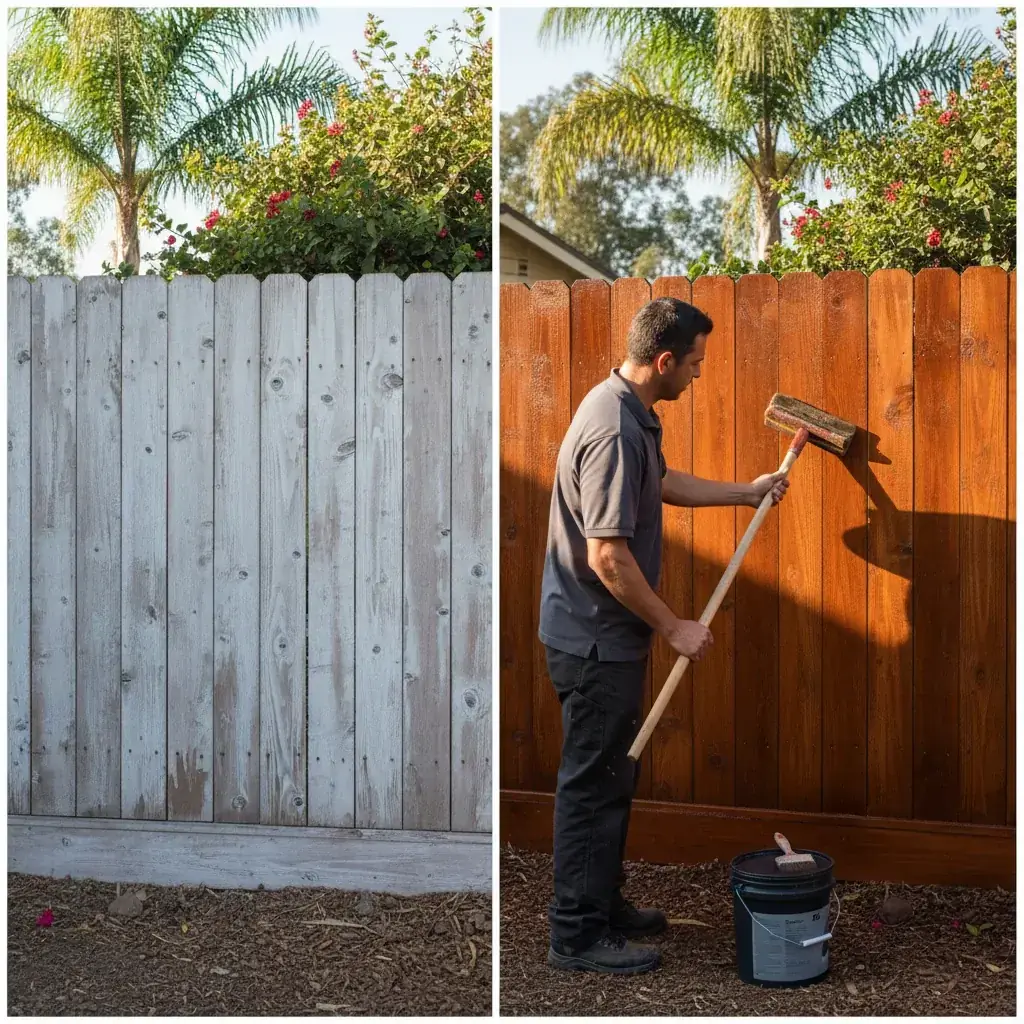
In San Diego, most wood fences need staining every 2 to 3 years on the coast and every 3 to 5 years inland. The gap exists because coastal salt air and daily marine layer destroy a stain’s water-repellency far faster than the dry inland sun does. Your neighborhood matters more than your wood species, and waiting past those windows lets moisture and UV damage start the rot cycle that shortens your fence’s life.
A fence in La Jolla faces a very different set of challenges than one in Poway, and your maintenance schedule needs to reflect that reality. Getting it right prevents costly repairs and keeps your property looking its best.
Why San Diego sun and salt air breaks down stain faster
We live in paradise, but our beautiful weather is relentless on exterior wood. Unlike regions with harsh winters, our fences don’t get a break. They are exposed to two primary attackers year-round: intense ultraviolet (UV) radiation and, for many of us, corrosive salt air.
Intense UV Exposure: San Diego averages over 260 sunny days per year. This constant barrage of UV radiation is the main reason wood turns gray. Sunlight breaks down lignin, the natural polymer that holds wood fibers together. As the lignin degrades, the surface becomes brittle, discolored, and less able to hold onto a protective stain. The stain itself also suffers, as the sun’s rays break down the pigments and resins that give it color and water-repellency.
Corrosive Salt Air: If you live within a few miles of the coast, salt is your fence’s biggest enemy. The marine layer and ocean breezes deposit microscopic salt crystals on every surface. Salt is hygroscopic, meaning it attracts and holds water. This moisture gets pulled into the wood, causing it to swell. When the sun comes out and the wood dries, it shrinks. This constant cycle of expansion and contraction puts immense stress on the wood fibers and the stain, causing it to crack and flake much faster than it would inland. This is a key part of any effective fence maintenance San Diego plan.
Together, these two forces create a uniquely challenging environment. The sun bakes the wood and weakens the stain, while the salt air pries it open, allowing moisture to get in and start the process of rot and decay. This is why a generic “stain every five years” rule you might read online simply doesn’t apply here.
The 2-year rule for coastal homes vs the 4-year rule for inland
Because of the huge difference in climate between our coastline and inland valleys, we use a simple geographic rule of thumb. Where you live in San Diego County is the single biggest factor in determining your fence staining schedule.
Coastal Communities: The 2-Year Rule
If you live west of I-5 or even I-805, in neighborhoods like La Jolla, Del Mar, Carlsbad, Encinitas, Point Loma, or Coronado, you are in the high-impact zone. The daily marine layer and salt spray dramatically accelerate the breakdown of your fence’s protective coating.
For these coastal homes, you should plan to restain your fence every 2 to 3 years.
This isn’t just about aesthetics. At the two-year mark, the stain’s ability to repel water is often significantly diminished, even if the color still looks okay from a distance. Waiting longer allows salt and moisture to penetrate the wood, which can lead to warping, splintering, and rot. Regular staining is the most important preventative maintenance you can do.
Inland Communities: The 4-Year Rule
For homeowners east of I-15, in areas like Poway, Escondido, Santee, El Cajon, or Ramona, the primary concern is the intense, dry sun. You don’t have the corrosive salt air, so stains last significantly longer.
For these inland homes, a staining schedule of every 3 to 5 years is generally sufficient.
Here, the main goal is to renew the UV protection and seal the wood before it starts to gray and crack from the heat. You have a bit more flexibility, but pushing it past the five-year mark is risky. By then, the original seal has likely failed, leaving the wood exposed to the elements. A regular fence staining San Diego schedule protects your investment for the long term.
Signs it’s time to re-stain (water absorption, graying, flaking)
While the coastal and inland rules are great guidelines, your fence will give you clear signals when it needs attention. Instead of just marking a date on the calendar, learn to spot these three key indicators.
1. The Water Test
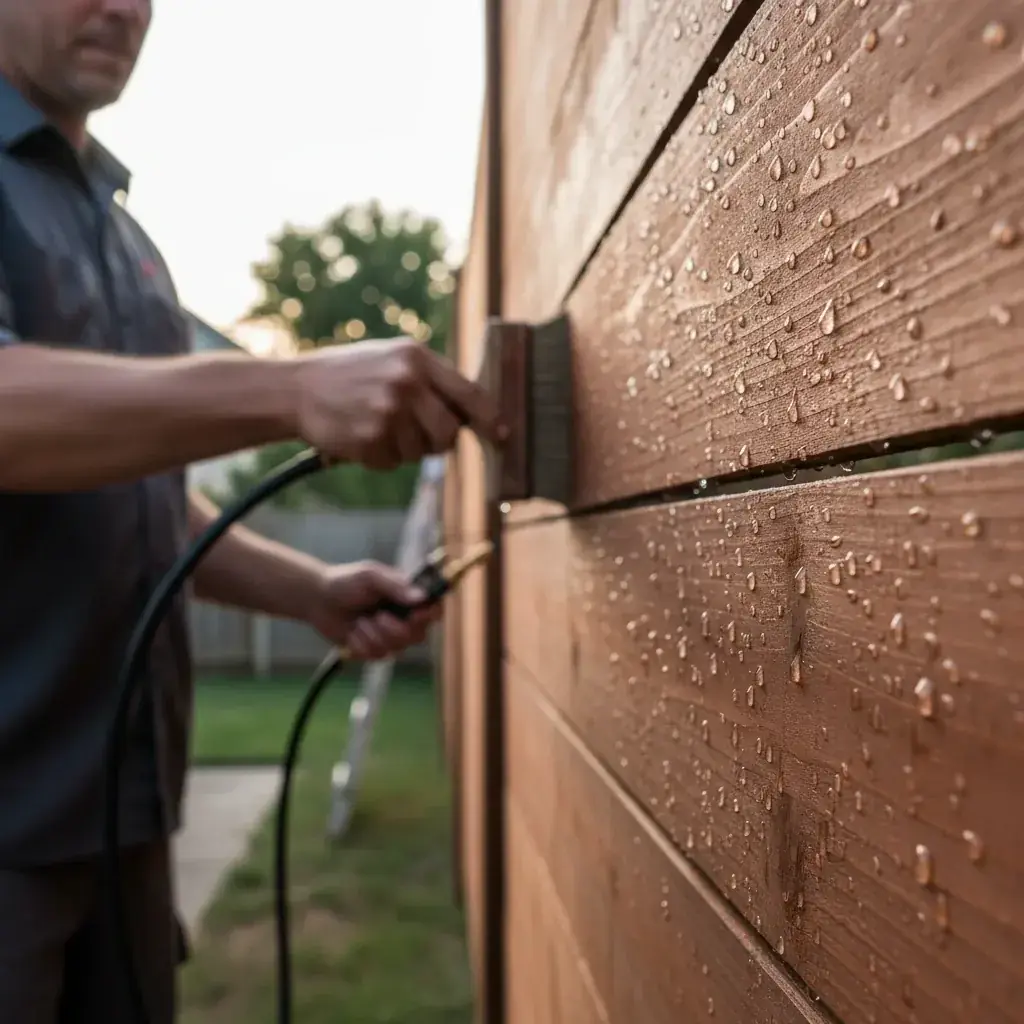
This is the most reliable way to check your stain’s health. On a dry day, splash or spray a little water onto a few different areas of your fence.
- Beads Up: If the water beads up like on a freshly waxed car, your stain is still effectively sealing the wood. You’re in good shape.
- Soaks In: If the water darkens the wood and soaks in within a minute or two, the protective seal is gone. The wood is now a sponge for any moisture, and it’s definitely time to restain your fence.
This simple test tells you everything you need to know about the stain’s most important job: water repellency.
2. Visible Graying and Fading
Color is a clear indicator of UV damage. That silvery-gray look that some people associate with “weathered wood” is actually sun-damaged wood fiber. When you see the rich cedar or redwood color fading to a washed-out gray or tan, it means the UV inhibitors in the stain have been exhausted. The wood itself is now taking the full force of the sun. Don’t wait until the whole fence is gray; it’s best to act when you first notice significant, uneven fading.
3. Flaking, Peeling, or Cracking
This is the most urgent sign. If you can see the old stain physically flaking off or peeling away from the wood, the coating has completely failed. At this stage, the wood is totally exposed to sun and moisture. This often happens with lower-quality, film-forming stains that create a layer on top of the wood rather than penetrating it. When you see this, a simple re-stain isn’t enough. The fence will require extensive prep work, including scraping and sanding, to remove all the failing stain before a new coat can be properly applied. If you see any of these signs, it’s time to consider a professional fence staining and sealing service to restore protection and beauty to your property.
Does the type of wood (cedar vs redwood) change the schedule?
The type of wood your fence is made from does play a role, but it’s secondary to your location in San Diego. The difference between a fence in Encinitas and one in Escondido is far greater than the difference between a redwood and cedar fence in the same backyard. If you haven’t picked a species yet, our guide to the best wood for a San Diego fence walks through the trade-offs.
Redwood and Cedar
These are the two premium choices for wood fences in Southern California, and for good reason. Both contain natural tannins and oils that make them inherently resistant to rot, decay, and insects. They also accept stain beautifully, allowing the product to penetrate deep into the wood grain for long-lasting protection.
Between the two, the maintenance schedule is very similar. A redwood or cedar fence might last on the longer end of our recommended ranges. For example, a well-maintained redwood fence in an inland area like Rancho Bernardo could comfortably go five years between staining. On the coast, however, even premium redwood will still need attention every 2-3 years.
Pressure-Treated Wood (Pine, Fir)
Pressure-treated (PT) wood, typically pine or fir, is a more common and budget-friendly option. It doesn’t have the natural defenses of redwood or cedar. Instead, it relies on chemical treatments forced deep into the wood to prevent rot and insects. For PT lumber, staining isn’t just an option, it’s essential. The stain provides the primary barrier against sun and water damage.
Because it’s less stable and more porous, pressure-treated wood generally requires staining on the shorter end of our recommended ranges. A PT fence in a coastal area should be checked annually and likely re-stained every two years without fail.
Ultimately, while your wood choice matters for longevity and appearance, it doesn’t change the fundamental rules. The sun and salt will break down the stain on any wood type. Choosing the right finish can highlight the grain of any wood. If you’re looking for inspiration, we have a guide with some of the best fence stain colors for San Diego homes that work well with all of these wood types.
Frequently asked questions
How often should you stain a wood fence in San Diego?
Coastal homes west of I-5 or I-805 should restain every 2 to 3 years, while inland homes east of I-15 can typically go 3 to 5 years between coats. Salt air and the marine layer strip a stain’s waterproofing much faster than the dry inland heat does, so location is the biggest factor in setting your schedule.
How much does fence staining cost in San Diego?
Professional fence staining in San Diego typically runs $1 to $3 per square foot of fence surface, depending on fence size, condition, and the number of coats needed. A standard 150-linear-foot fence usually comes in between $400 and $900, with prep work such as cleaning and sanding adding to the total if the surface is heavily weathered.
How long does a fence stain last in a coastal San Diego climate?
In coastal neighborhoods with daily salt air and marine layer, a quality penetrating oil-based stain generally lasts 2 to 3 years before water absorption returns. Film-forming stains tend to peel faster in humid coastal conditions and often fail sooner, so penetrating formulas are the better choice for homes near the ocean.
Do I need a permit to stain my fence in San Diego?
No permit is required to stain or seal an existing wood fence in San Diego. Permits apply to new fence construction or structural repairs that change the fence’s height or footprint. Staining is routine maintenance and can be scheduled any time.
Does wood type change how often I need to stain my fence?
Wood type has a smaller effect than location, but it does matter. Redwood and cedar contain natural oils that slow moisture absorption, so they tend to hold stain slightly longer than pressure-treated pine or fir. A cedar or redwood fence in an inland area can often reach the five-year mark, while a pressure-treated fence in a coastal area should be checked every year and restained closer to the two-year mark.
What happens if I wait too long to restain my fence?
Once the stain fails, wood absorbs water with every rain or marine layer event, then dries out under the sun. That repeated swelling and shrinking cracks the wood fibers, leading to splintering, warping, and eventually rot. At that stage, simple restaining is not enough. The fence will need heavy prep work, and in some cases boards may need replacement before a new coat will bond properly.
When to call us
Proper fence staining involves more than just brushing on a new coat. The preparation, thorough cleaning, removal of mildew, and sometimes sanding, is 90% of the job and determines how long the new coat will last.
If your fence is showing signs of water absorption, is turning gray, or you simply don’t have a weekend to dedicate to the demanding prep work, it’s a good time to call a professional. We have the right equipment to prepare the wood surface correctly and apply a high-quality, penetrating oil-based stain that will protect your fence for years.
Call us at (858) 925-5546 for a same-day estimate.