Garden fence ideas for San Diego fail when they treat rabbits, gophers, and deer as one animal. A short hog-wire run can stop a rabbit and do nothing to a deer. A tall mesh deer fence does nothing to a gopher. Identify the pest, then pick height, burial, and material as separate decisions.
Fence Pros San Diego is a referral service. It does not set prices or warrant pest results.
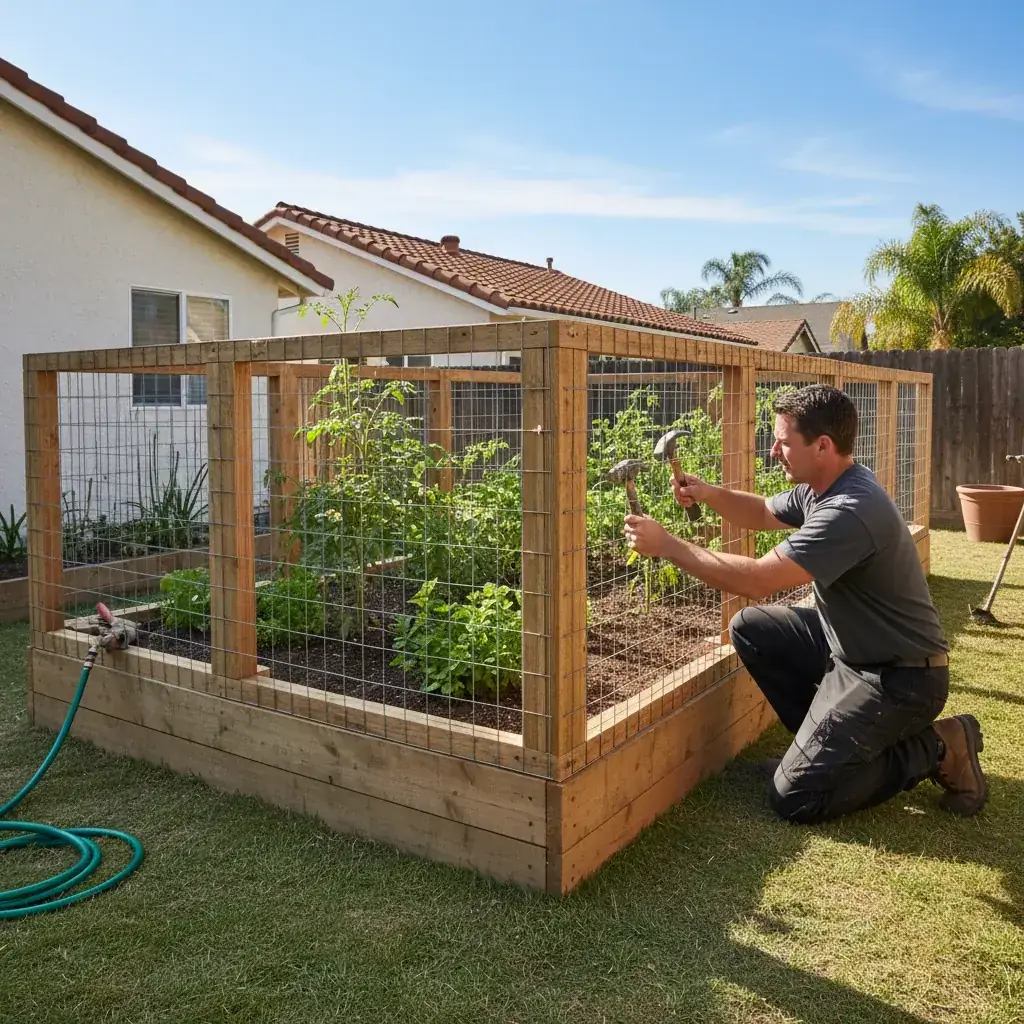
Keeping rabbits, gophers, and deer out of San Diego gardens
Coastal neighborhoods such as La Jolla or Encinitas often have rabbit pressure on tender greens. East County and backcountry communities such as Ramona, Julian, Valley Center, and Alpine add deer and pocket gophers. Those are different barriers.
A fence designed to stop a rabbit will not slow a deer. A tall deer fence does nothing to a gopher. Build for the animal on the property.
Hog wire, picket, and bamboo
Hog wire
A wire grid framed in cedar or redwood. Smaller openings toward the bottom are a common product pattern. It doesn’t shade plants the way a solid board fence does. See hog wire fence. Useful against rabbits and medium animals if the bottom is closed. Not a deer spec by itself.
Picket
A fit for flower borders and some front-yard gardens. Gaps have to stay narrow enough that a rabbit cannot walk through. A wood fence picket line is a style choice. It is not an 8-foot deer fence.
Bamboo
Rolled bamboo is a screen, not a structural pest wall. Mount it to a real frame if you need it to last. Chewers and East County deer are still a separate problem.
Heights and depths: questions to take to the installer
Decorative borders will not stop a hungry animal. Ask the contractor to name height, burial, and mesh size for the pest you have. Do not treat the figures below as a tested San Diego field study. They are the usual starting questions.
Rabbits. Height and a closed bottom both matter. Ask whether the mesh is buried or bent into an outward L. A 24- to 36-inch face is a common product range, not a guarantee.
Gophers. An above-ground fence does not stop them. Hardware cloth under a raised bed, or a buried vertical barrier, is the usual approach. Depth, mesh size, and whether the bottom bends outward are items for the person digging the trench. Fence work and landscape trenching can be different scopes.
Deer. Height is the usual conversation in Ramona, Julian, Valley Center, and Alpine. An 8-foot garden mesh fence on unincorporated land is both a building-permit and a zoning question. County PDS 070 requires a permit except qualifying fences not over 6 feet that meet zoning. The same bulletin’s zoning excerpt lists 72 inches in a rear or interior side yard. An 8-foot garden enclosure is not the barbed-wire security exception. Confirm with County PDS before you order posts. See deer fence.
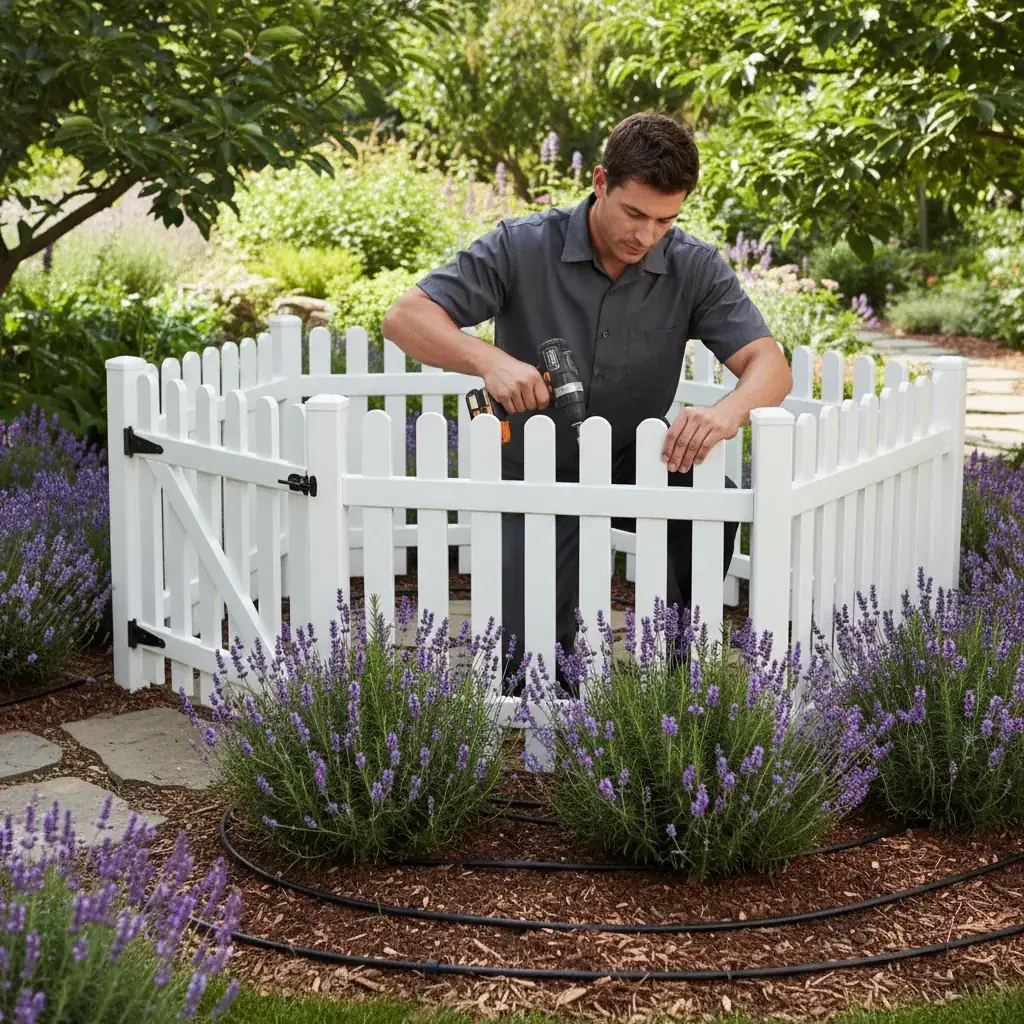
Pairing a garden fence with raised beds and irrigation
Raised beds let you attach a short fence to the bed wall and line the bed bottom with hardware cloth before you add soil. Plan the gate for a wheelbarrow. Run irrigation laterals before posts are set if you can. Those are layout steps, not a product ranking.
Quick-build vs permanent installs
T-posts and a roll of mesh can go up in an afternoon. They suit a rental, a test bed, or a season. They are not a property-line fence.
A permanent cedar-framed hog wire or wood run with posts in concrete is a different bid. For deer height, hills, or a shared line, use fence installation and confirm the desk that owns the parcel. Fence Pros San Diego does not install either version.
Frequently asked questions
What is the best garden fence idea for San Diego vegetable beds?
Cedar-framed hog wire is a common vegetable-bed choice because it blocks small animals without shading plants. Pair it with a closed bottom. Name the pest before you copy a neighbor’s height.
How much does a garden fence cost in San Diego?
A verified current per-foot price isn’t in the approved claims ledger. Fence Pros San Diego doesn’t set contractor prices. Compare itemized proposals for the same measured perimeter, including burial, gates, and any County review.
How tall does a garden fence need to be to keep deer out?
Ask the installer and County PDS together. On unincorporated land, 8-foot garden mesh is often both a permit and a 72-inch rear-yard zoning issue. A 6-foot angled or double-fence layout is a design idea, not a substitute for that confirmation.
Do I need a permit to build a garden fence in San Diego?
There is no verified “under 3 feet, no permit” countywide letter in the approved claims ledger. City Table 142-03A uses 7 feet for the fence-division building-permit split. County PDS 070 excepts qualifying fences not over 6 feet that meet zoning, including 42-inch front-yard and 72-inch rear-yard excerpts. Confirm the address.
What garden fence works best for gopher control?
An above-ground fence does not. Ask about hardware cloth under raised beds or a buried perimeter. That may be landscape work, fencing work, or both. Get it in the written scope.
How long does a garden fence last in San Diego’s coastal climate?
No verified lifespan table is in the claims ledger. Cedar, redwood, galvanized mesh, and unfinished pine age differently. Ask the product manufacturer and the installer for maintenance, not a year count from this page.
When to call us
Call when a permanent garden enclosure, a deer-height run, or a gopher barrier needs a licensed independent contractor. Call us at (858) 400-4906 and we’ll connect you with a licensed fence contractor.